When Your Ovulation Clock Doesn’t Follow a Schedule
Picture this. You expect your period every 28 to 30 days. One month it shows up after 35 days. The next month it takes 50. Sometimes it skips completely.
If that sounds familiar, you are not alone. For many women with PCOS, this pattern means more than a messy calendar. It may mean your body is not releasing an egg on a regular basis.
So, why does PCOS stop ovulation? In short, hormones, insulin, and tiny follicles all send mixed signals to each other.
Ovulation is the monthly release of an egg from an ovary. Without it, pregnancy cannot happen that cycle. Predictable ovulation also helps you time sex and read your body’s signals.
In this post, you will learn how ovulation works and what goes wrong with PCOS. You will also learn how to spot the signs, confirm ovulation, and know when to get help. This article is part of our complete guide to female fertility.
What Is Anovulation, and How Is It Different From Irregular Ovulation?
These terms sound alike, but they mean different things. Let’s sort them out first.
What happens during normal ovulation?
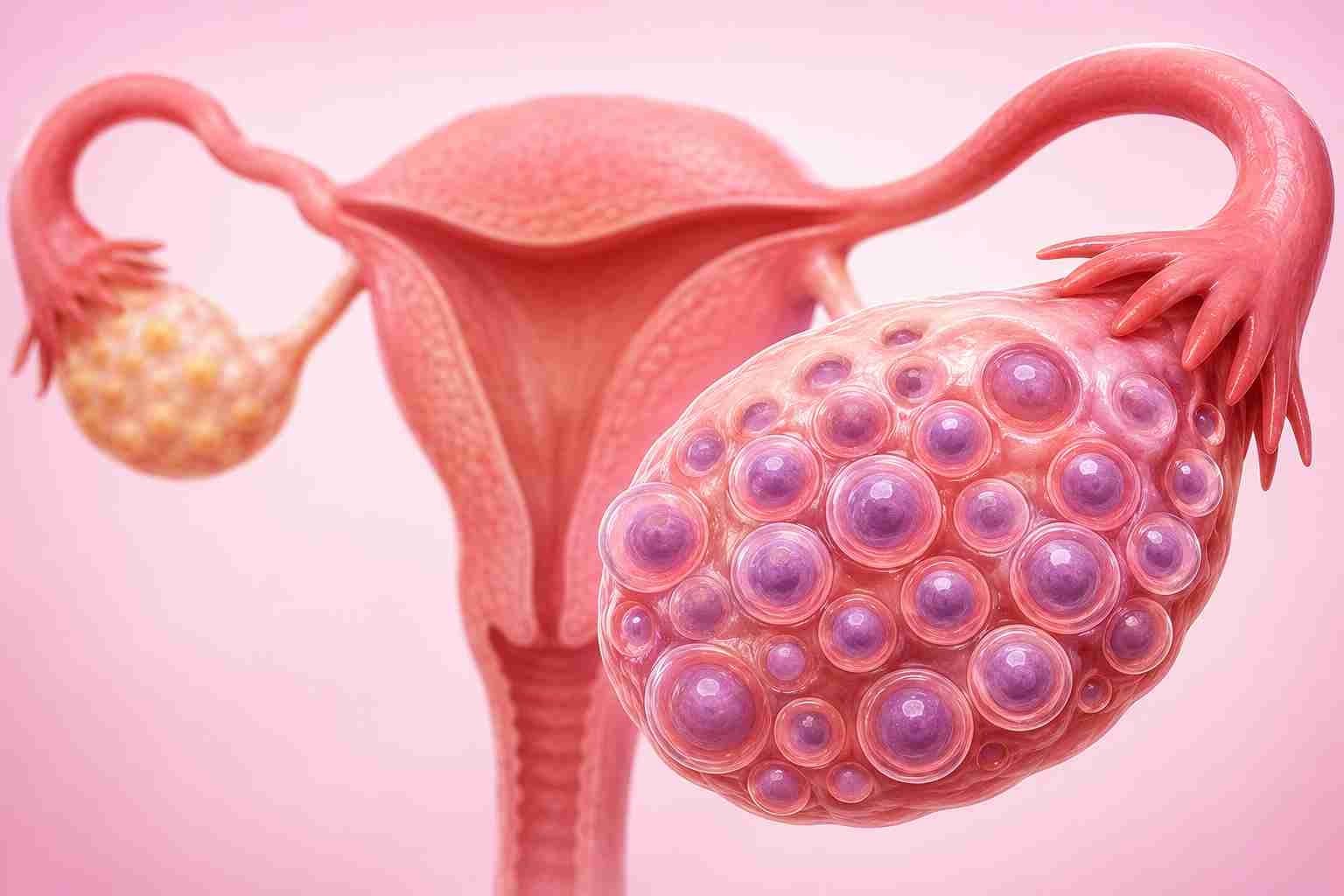
Each month, your brain signals the ovaries to grow follicles. Follicles are tiny fluid-filled sacs that each hold an egg.
Here is the usual order of events:
- Several follicles start to grow.
- One follicle takes the lead and becomes dominant.
- A surge of luteinizing hormone (LH) tells that follicle to release its egg.
- The egg enters the fallopian tube and waits for sperm.
What does anovulation mean?
Anovulation means your ovary does not release an egg during a cycle. You may still have bleeding. You may even feel some symptoms. But no egg leaves the ovary.
Is irregular ovulation the same as anovulation?
No. Here is the difference:
- Regular ovulation: You release an egg in a fairly predictable pattern.
- Irregular ovulation: You do release an egg, but the timing swings from month to month.
- Anovulation: You release no egg in that cycle.
Many women with PCOS move between all three. One month they ovulate late. The next month they skip it. That is why PCOS feels so unpredictable.
Why Does PCOS Stop Ovulation? Understanding the Hormonal Connection
Now we get to the heart of it. PCOS does not switch off your ovaries. Instead, several systems get out of sync. Doctors call this a hormonal imbalance, but it works more like a chain reaction.
- Insulin resistance raises insulin levels.
- High insulin pushes the ovaries to make more androgens.
- Extra androgens and altered LH and FSH signals disrupt follicle growth.
- Follicles stall, and no egg is released.
Let’s break down each link.
-
Insulin resistance can disrupt ovarian hormone activity
Insulin is a hormone that helps your cells use sugar from food. With insulin resistance, your cells respond poorly. Your body then makes extra insulin to compensate.
Here is the catch. Your ovaries still listen to insulin, even when other cells ignore it. High insulin levels can nudge the ovaries to produce more androgens.
Those extra androgens get in the way of normal follicle growth. That can delay ovulation or stop it for a cycle.
Not every woman with PCOS has insulin resistance. But it is common, even in women with a lean body type.
-
Higher androgen levels interfere with follicle development
Androgens are often called male hormones. Every woman makes small amounts. They play a role in energy, mood, and the building of other hormones.
With PCOS, androgen activity runs higher. Follicles need a balanced hormone environment to mature. Too many androgens can disrupt that balance.
The result? Follicles begin to grow but struggle to finish the job. They may never reach the size needed to release an egg.
-
Altered LH and FSH signals affect follicle maturation
Two brain hormones guide your ovaries each month:
- FSH (follicle-stimulating hormone) helps follicles grow.
- LH (luteinizing hormone) triggers the egg release.
In PCOS, the signals between the brain and ovaries can shift. LH may run higher than usual. FSH may not rise enough to push one follicle to the finish line.
You may hear about the “LH to FSH ratio.” Doctors do not use this ratio alone to diagnose PCOS. It varies too much from woman to woman.
-
Follicles may not develop normally
Many women with PCOS have lots of small follicles. They start to grow, then stall. Doctors call this follicular arrest.
Picture a crowded start line where no runner breaks free. The follicles are there, but none becomes dominant. So no egg gets released.
One more important point. PCOS looks different in every woman. Hormone patterns vary. The ovaries have not “stopped working.” They are getting mixed messages, and the pattern changes from person to person.
What Happens to Your Menstrual Cycle When You Don’t Ovulate?
Your cycle follows your hormones. When ovulation goes off track, your periods follow.
Why do periods become irregular?
When ovulation comes late, your next period comes late too. Take a woman who ovulates on day 16 one month. The next month her follicle needs until day 40. Her cycles will swing from 30 days to 54 days. That is normal for PCOS, even if it feels strange.
Why might periods disappear for months?
Sometimes a follicle never matures. Then your hormones do not follow their usual pattern, and your period may not come at all. Doctors call a long gap without periods amenorrhea. If you miss your period for around 90 days or more, get it checked.
Can you bleed without ovulating?
Yes. This surprises many women. Your uterine lining builds up under the influence of estrogen. At some point, it can break down and bleed, even with no egg released.
So a period does not prove you ovulated. This is called anovulatory bleeding. It may look like a normal period, or it may be heavier or lighter.
Why can long gaps between periods matter?
Without ovulation, your body does not make progesterone. Progesterone normally balances estrogen and keeps the uterine lining in check.
When you go months without a period, the lining can keep thickening under estrogen alone. Over time, this can raise the risk of endometrial hyperplasia, which means an overgrown lining. That is one more reason to see a doctor about very long gaps.
Signs That PCOS May Be Affecting Your Ovulation
Not sure if this applies to you? Look for these common signs:
- Periods that often come more than 35 days apart
- Fewer than eight periods in a year
- Missing periods for several months
- Trouble predicting your fertile days
- Ovulation signs that come and go, or never show up
- Difficulty conceiving despite regular attempts
Important: Regular periods do not always guarantee ovulation. Irregular periods also do not prove that every cycle lacks ovulation. Only proper tracking or testing can tell you for sure.
Other PCOS symptoms may show up too. These include acne, extra hair growth, and thinning hair on the scalp. Not everyone has them, though.
How Can You Tell If You’re Ovulating With PCOS?
This is where many women get stuck. Here are five tools, from simplest to most reliable.
-
Track your menstrual cycle
Write down the first day of each period. Over a few months, patterns appear. Cycle tracking cannot confirm ovulation. But it shows how irregular your cycles really are, which helps your doctor.
-
Watch your cervical mucus
Around your fertile window, mucus often turns clear, slippery, and stretchy. It looks a bit like raw egg white. Seeing this suggests your body is preparing to ovulate. It does not prove an egg actually left the ovary.
-
Know the limits of ovulation predictor kits
These kits detect LH in your urine. With PCOS, LH may run high throughout the month. That can cause faint lines, repeated positives, or confusing results. A positive test does not always mean you ovulated.
For a deeper look, read our guide on how to track ovulation with PCOS.
-
Track your basal body temperature
Take your temperature every morning before you get out of bed. After ovulation, progesterone raises your temperature slightly. A lasting rise can show that ovulation likely happened. It confirms ovulation after the fact, not before.
-
Ask about medical confirmation
Doctors have two main tools:
- Serum progesterone test. This blood test checks for the progesterone rise after ovulation. Timing matters. Your doctor times it based on when you likely ovulated. A fixed calendar day does not work with irregular cycles.
- Ultrasound follicle monitoring. Scans track follicle growth and show whether one releases an egg.
Does Anovulation With PCOS Mean You Cannot Get Pregnant?
No. But it does make natural conception harder in the cycles where no egg is released.
Here is what to keep in mind:
- Some women with PCOS ovulate now and then.
- Some have irregular cycles but still ovulate.
- PCOS does not automatically mean permanent infertility.
- Other factors matter too, including sperm health and open fallopian tubes.
Your odds depend on how often you ovulate. They also depend on your age and your partner’s health. We cover the numbers and what shapes them in our article on the chances of getting pregnant naturally with PCOS.
The takeaway here is hopeful. Anovulation is a problem doctors know how to treat.
Can You Restore Ovulation With PCOS? Evidence-Based Treatment Options
Yes, many women can. The right approach depends on your health, your goals, and your test results.
Lifestyle changes and metabolic health
Healthy habits can improve insulin levels and hormone balance. Start with these:
- Eat balanced meals with protein, fiber, and whole grains.
- Move your body regularly, such as brisk walking or strength training.
- Get seven to nine hours of sleep.
- Aim for gentle, sustainable weight management if your doctor advises it.
These steps support your metabolic and reproductive health. For some women, they bring ovulation back. For others, they do not. That is no failure on your part. PCOS is a medical condition, not a lack of effort.
Metformin and insulin resistance
Metformin is a medicine that helps your body use insulin better. Doctors often use it to treat the metabolic side of PCOS. In selected women, it may also help cycles become more regular. It does not work for everyone, and your doctor will decide whether it suits you.
Ovulation-inducing medications
Some medicines prompt your ovaries to release an egg. Your doctor may suggest:
- Letrozole. The 2023 international PCOS guideline recommends it as the first-choice medicine for women with PCOS who struggle to conceive because of anovulation, when no other fertility factors exist.
- Clomiphene citrate. An older, well-known option.
- Other specialist options. These include injectable hormones, used under close supervision.
Please do not self-medicate. These medicines need a proper assessment and monitoring. Your doctor will check for other fertility factors first, and will also explain side effects and risks like twins.
When Should You See a Doctor for PCOS-Related Anovulation?
Book an appointment if any of these apply to you:
- Your periods come more than 35 days apart most of the time.
- You have fewer than eight cycles a year.
- You go about 90 days or longer without a period.
- You suspect you are not ovulating.
- You want to conceive and have irregular or missing periods.
If you know your ovulation is irregular, you do not need to wait 12 months of trying. Many doctors advise an earlier visit. A quick check can save you months of guessing.
At your visit, your doctor may test your thyroid, prolactin, and androgen levels. They may also check blood sugar and other markers. These tests rule out other causes of missed periods, since several conditions can mimic PCOS.
Want to understand how cycle patterns affect fertility more broadly? Read our piece on irregular periods and female fertility.
Conclusion: Understanding Your Ovulation Is the First Step
PCOS can make ovulation unpredictable. But once you understand the hormones and insulin behind it, you can take clear steps forward.
You should not have to simply live with irregular periods, especially when trying to conceive. With the right evaluation and a plan built for you, ovulation can often improve.
Do not rely on symptoms or home tests alone. Talk with a qualified healthcare professional who can confirm what is happening in your body. For the bigger picture, head back to our complete guide to female fertility.
This article is for general education and is not medical advice. Please talk to your doctor about your own situation.
Frequently Asked Questions About PCOS and Anovulation
-
Why does PCOS stop ovulation?
Insulin resistance, higher androgens, and altered LH and FSH signals disrupt follicle growth. Follicles stall, so no egg gets released. The exact mix differs from woman to woman.
-
Can you have PCOS and still ovulate every month?
Yes. Some women with PCOS ovulate regularly. PCOS varies widely, and symptoms differ from person to person.
-
Does PCOS mean you never release an egg?
No. Many women release eggs, just not on a predictable schedule. Some skip months, and some ovulate normally.
-
Can you have a period without ovulating?
Yes. Anovulatory bleeding can look like a normal period. A period alone does not prove ovulation.
-
How long can you go without ovulating with PCOS?
It varies. Some women skip a cycle or two. Others go many months. See a doctor if you go around 90 days without a period.
-
Can ovulation return naturally with PCOS?
Sometimes. Healthy habits, weight changes, or time can bring it back for some women. Others need medical help.
-
How do I know if I am ovulating with PCOS?
Combine tools. Track mucus, temperature, and cycle length. Ask your doctor about a progesterone test or ultrasound for confirmation.
-
Does insulin resistance affect ovulation?
Yes. High insulin can push the ovaries to make more androgens, which disrupts follicle growth.