Female Fertility: A Complete Guide to Understanding and Improving Your Chances of Conceiving
Trying to understand your fertility can feel confusing. There’s a lot of information out there. Some of it helps. Some of it just adds stress.
This guide brings it all together in one place. It covers how fertility works, what affects it, and what you can actually do about it. Every section links to a deeper guide if you want more detail on that specific topic.
If you’re just starting to think about fertility, or you’ve been trying to conceive for a while, start here.
Table of Contents
- What Is Female Fertility
- Key Hormones Involved in Fertility
- How the Menstrual Cycle Affects Fertility
- Understanding Your Fertile Window
- Preparing Your Body Before Trying to Conceive
- Common Causes of Female Infertility
- Types of Female Infertility Explained
- Signs You May Have a Fertility Problem
- Age and Fertility
- Diet and Nutrition for Fertility
- Foods That May Affect Fertility
- Lifestyle Factors That Affect Fertility
- Environmental and Medical Factors That Affect Fertility
- Fertility Preservation: Egg Freezing Explained
- Fertility Testing: What to Expect
- The Role of Your Partner in Fertility
- Natural Ways to Boost Your Fertility
- PCOS and Female Fertility: Why This Connection Matters
- How Long Do Fertility Changes Take to Work
- Medical Treatment Options
- When to See a Fertility Specialist
- Common Fertility Myths, Debunked
- The Emotional Side of Trying to Conceive
- Living Well While Trying to Conceive
- What to Read Next
- Frequently Asked Questions
What Is Female Fertility?
Female fertility is your body’s ability to conceive and carry a pregnancy. It depends on several things working together.
Your ovaries need to release a healthy egg each cycle. Your hormones need to stay balanced enough to support ovulation. Your reproductive organs need to be in good working order, from your fallopian tubes to your uterus.
Fertility isn’t a fixed number. It shifts with age, health, stress, and lifestyle. Some months your body is more fertile than others, even within a normal cycle.
Understanding how these pieces fit together helps you make sense of your own body. It also helps you know what’s actually worth worrying about, and what isn’t.
Key Hormones Involved in Fertility
Several hormones work together to control ovulation and prepare your body for pregnancy. Understanding them makes the rest of this guide easier to follow.
FSH (follicle-stimulating hormone) tells your ovaries to start developing an egg each cycle. Levels naturally rise as your egg supply declines with age.
LH (luteinizing hormone) triggers the actual release of the egg. A sudden LH surge is what ovulation predictor kits detect.
Estrogen rises as the egg develops. It thickens the uterine lining and helps produce fertile cervical mucus.
Progesterone rises after ovulation. It maintains the uterine lining and supports early pregnancy if conception happens.
AMH (anti-Müllerian hormone) reflects your remaining egg supply. Doctors often use it to estimate ovarian reserve.
When these hormones stay balanced, ovulation tends to happen predictably. When one is off, it can throw the whole cycle out of sync. This is exactly what happens in conditions like PCOS, where elevated androgens disrupt the normal FSH and LH balance needed for regular ovulation.
You don’t need to memorize every hormone’s job. Just knowing they work as a team helps explain why one imbalance can ripple through your entire cycle.
How the Menstrual Cycle Affects Fertility
Your menstrual cycle isn’t just about your period. It’s the engine behind your fertility.
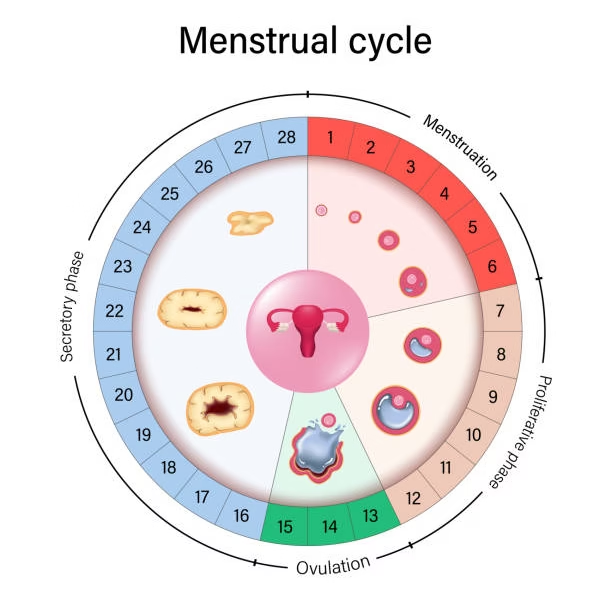
A typical cycle runs about 28 days, though anywhere from 21 to 35 days is normal. It has four main phases:
- Menstrual phase — your period, when the uterine lining sheds
- Follicular phase — your body prepares an egg for release
- Ovulation — the egg is released from the ovary
- Luteal phase — your body prepares for possible pregnancy
Ovulation is the key event. Without it, pregnancy can’t happen naturally. Cycles that are very irregular often signal that ovulation isn’t happening consistently.
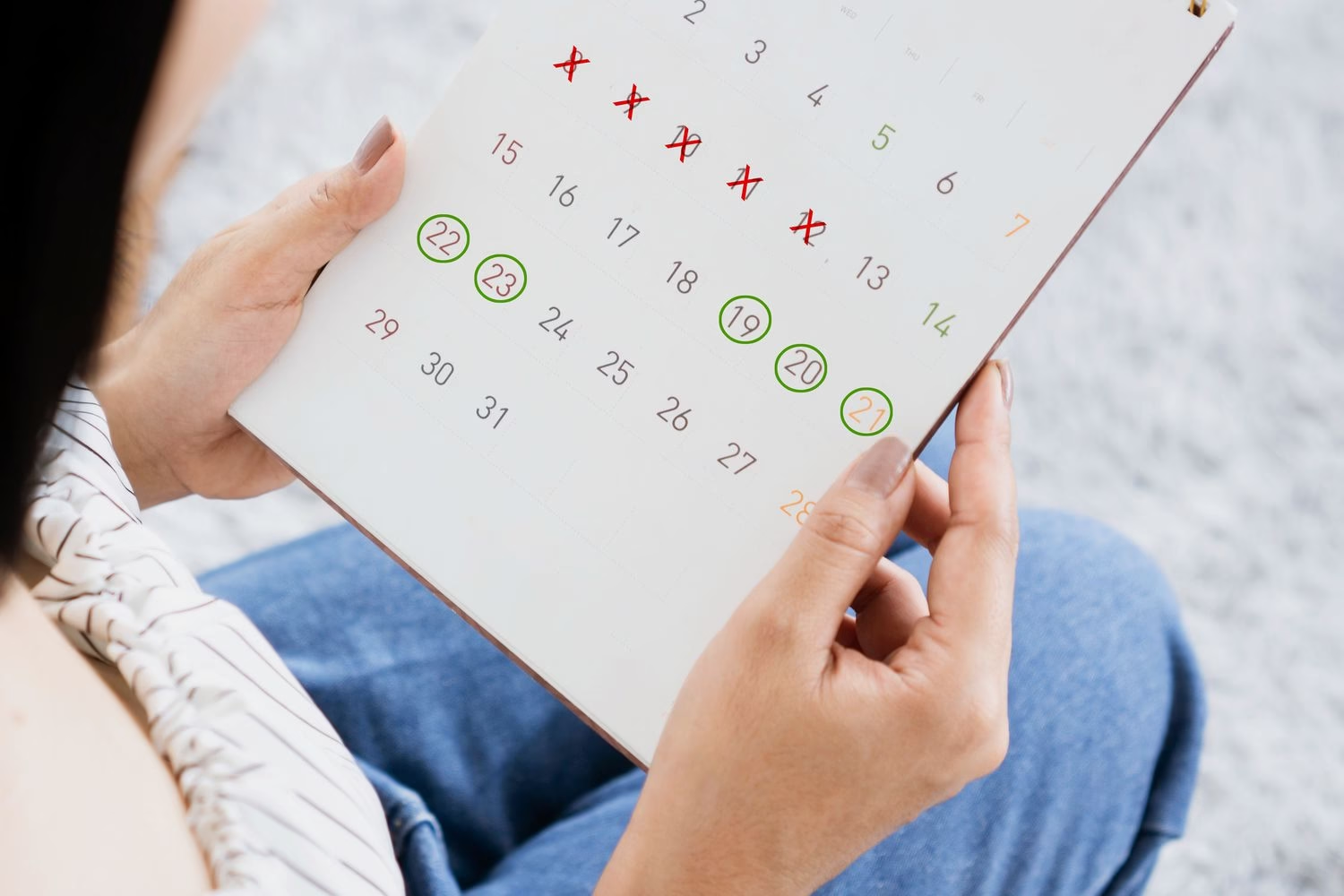
Tracking your cycle length over a few months gives you useful information. It’s one of the simplest ways to understand your own fertility pattern.
Understanding Your Fertile Window
Your fertile window is the short stretch of time each cycle when pregnancy is possible.
An egg survives for about 12 to 24 hours after release. Sperm, though, can survive inside the body for up to five days. That gives you a window of about six days total.
Here’s how to estimate it:
- Ovulation usually happens about 14 days before your next period starts
- Your most fertile days are the two to three days leading up to ovulation
- The day of ovulation itself is also highly fertile
Cycle length varies from person to person, and month to month. That’s why tracking ovulation directly, rather than just counting calendar days, gives more accurate results.
Preparing Your Body Before Trying to Conceive
If you’re planning to try soon, a few steps before you start can make a real difference.
Schedule a preconception checkup. Your doctor can review your health history and flag anything worth addressing early.
Start a prenatal vitamin. Folic acid is especially important in the weeks before conception, since it supports early neural development.
Review your medications. Some medications aren’t safe during pregnancy and may need adjusting ahead of time.
Update your vaccinations. Certain vaccines are best completed before pregnancy rather than during it.
Get bloodwork done. A baseline check of thyroid function, iron levels, and vitamin D can catch issues before they affect conception.
Address any chronic conditions. Diabetes, thyroid disorders, and PCOS are all easier to manage before pregnancy than during it.
None of these steps guarantee a smooth journey. But they stack the odds in your favor, and they give you a clearer picture of where you’re starting from.
Common Causes of Female Infertility
Infertility has many possible causes. Some affect ovulation. Others affect the reproductive organs directly.
Ovulation disorders are the most common cause. These prevent regular, predictable egg release.
Polycystic Ovary Syndrome (PCOS) is the leading cause of ovulation-related infertility. It disrupts hormone levels and often stops ovulation from happening regularly. If you want a full breakdown of how PCOS works, our complete PCOS guide covers it in depth.
Other common causes include:
- Blocked or damaged fallopian tubes
- Endometriosis
- Thyroid disorders
- Uterine fibroids or polyps
- Premature ovarian insufficiency
- Age-related decline in egg quality
Sometimes, no clear cause is found. This is called unexplained infertility, and it doesn’t mean nothing can be done. It just means more investigation is needed.
Types of Female Infertility Explained
Not all infertility looks the same. Doctors generally group it into a few categories.
Primary infertility means you’ve never carried a pregnancy and are struggling to conceive. This is the most commonly discussed type.
Secondary infertility means you’ve conceived before, sometimes successfully, but are now struggling to conceive again. It surprises many people, since it can happen even after an easy first pregnancy.
Recurrent pregnancy loss refers to two or more consecutive miscarriages. It’s treated as its own category, since the causes often differ from difficulty conceiving in the first place.
Unexplained infertility applies when standard testing finds no clear cause. It’s frustrating, but it doesn’t mean nothing can be done. Many couples with unexplained infertility still conceive with time or treatment.
Knowing which category applies to you helps guide the right next steps. It also helps set realistic expectations for what testing and treatment might look like.
Signs You May Have a Fertility Problem
Some signs are worth paying attention to, especially if you’ve been trying to conceive for a while.
Common warning signs include:
- Irregular or absent periods
- Very heavy or very light periods
- Severe menstrual pain
- No pregnancy after 12 months of trying (or 6 months if you’re over 35)
- Multiple miscarriages
- Signs of hormone imbalance, like acne or excess hair growth
One or two of these on their own don’t always mean a serious problem. But a pattern of several together is worth discussing with a doctor sooner rather than later.
Age and Fertility
Age is one of the biggest factors in female fertility, and it’s worth understanding clearly.
Women are born with all the eggs they’ll ever have. That number declines steadily over time, and egg quality declines too.
Here’s a general pattern:
- Fertility is highest in your 20s
- It starts to decline gradually in your early 30s
- The decline speeds up after age 35
- It drops more sharply after 40
These are averages, not guarantees. Some women conceive easily in their late 30s. Others face challenges earlier. Age affects the odds, but it doesn’t determine any one person’s outcome.
If you’re over 35 and thinking about trying to conceive, it’s reasonable to see a doctor sooner rather than waiting a full year.
Diet and Nutrition for Fertility
What you eat has a real, measurable effect on fertility. It won’t fix every issue, but it supports the systems that fertility depends on.
Helpful dietary habits include:
- Eating plenty of vegetables, fruits, and whole grains
- Including healthy fats like olive oil, nuts, and fatty fish
- Getting enough protein at each meal
- Limiting refined sugar and highly processed foods
- Staying well hydrated
Some nutrients matter more directly. Folate, iron, and vitamin D all play a role in reproductive health. Many doctors recommend a prenatal vitamin even before you start trying to conceive.
If you’re managing a condition like PCOS, diet plays an even bigger role. It affects insulin levels, which directly affects ovulation. Our guide on the best diet for PCOS breaks this down in detail.
Foods That May Affect Fertility
Just as some foods support fertility, others may work against it when eaten often.
Trans fats, found in some fried and packaged foods, have been linked to reduced ovulation in research studies.
Excess added sugar can spike blood sugar and insulin, which may disrupt hormone balance over time.
High-mercury fish, like swordfish or king mackerel, are worth limiting due to their effects on reproductive health.
Ultra-processed foods in general tend to crowd out the nutrients your body needs for hormone production.
Excess alcohol affects hormone levels and egg quality, even at moderate regular intake.
None of this means these foods must be avoided completely. Occasional treats are fine. What matters most is your overall pattern of eating, day to day, over months.
Lifestyle Factors That Affect Fertility
Beyond diet, several everyday habits influence your fertility, often more than people expect.
Weight matters in both directions. Being significantly underweight or overweight can disrupt ovulation. Even modest changes toward a healthier weight often help restore more regular cycles.
Exercise supports fertility, but balance matters. Moderate activity helps. Extremely intense or excessive exercise can actually suppress ovulation.
Sleep affects the hormones that regulate your cycle. Poor sleep raises stress hormones, which can throw off ovulation over time.
Stress doesn’t cause infertility on its own, but chronic stress affects hormone balance. It can make an already irregular cycle less predictable.
Smoking and alcohol both negatively affect egg quality and hormone balance. Cutting back, or quitting altogether, is one of the most effective things you can do for your fertility.
Small, consistent changes in these areas tend to matter more than big, short-term efforts.
Environmental and Medical Factors That Affect Fertility
Beyond daily habits, a few outside factors can quietly affect fertility too.
Chronic health conditions. Diabetes, autoimmune disorders, and untreated thyroid problems can all interfere with regular ovulation.
Certain medications. Some drugs, including long-term use of certain pain relievers or antidepressants, can affect hormone balance. Never stop a prescribed medication without talking to your doctor first.
Environmental toxins. Exposure to certain chemicals, including some found in plastics and pesticides, has been linked to reduced fertility in research studies.
Past infections or surgeries. Pelvic infections and some abdominal surgeries can cause scarring that affects the fallopian tubes or uterus.
Excessive caffeine. Very high caffeine intake has been associated with mildly reduced fertility, though moderate intake appears fine for most women.
You can’t control every factor on this list. But knowing they exist helps you have a more informed conversation with your doctor if you’re facing unexplained difficulty conceiving.
Fertility Preservation: Egg Freezing Explained
Egg freezing lets you preserve your current fertility for use later. It’s worth understanding, even if you’re not ready to use it yet.
The process involves:
- Hormone injections to stimulate multiple eggs at once
- Monitoring through bloodwork and ultrasounds
- A short retrieval procedure under sedation
- Freezing and storing the eggs for future use
Egg quality and quantity decline with age, so eggs frozen earlier generally offer better odds later. Most specialists suggest the outcomes are strongest before age 35, though many women freeze eggs successfully afterward too.
It’s not a guarantee of future pregnancy. Frozen eggs still need to survive thawing, fertilization, and implantation. But for many women, it offers valuable flexibility and peace of mind.
If you’re considering it, a consultation with a fertility clinic can walk you through your personal odds based on your age and ovarian reserve.
Fertility Testing: What to Expect
If you’ve been trying to conceive without success, testing can help identify what’s going on.
Common fertility tests include:
- Hormone blood tests — check levels of FSH, LH, estrogen, and thyroid hormones
- Ovarian reserve testing — measures AMH levels to estimate remaining egg supply
- Ultrasound — checks the ovaries and uterus for structural issues
- Hysterosalpingogram (HSG) — an X-ray test that checks if the fallopian tubes are open
- Semen analysis — for your partner, since fertility issues aren’t always one-sided
Testing usually starts simple and gets more detailed if needed. Most doctors begin with bloodwork and a pelvic ultrasound before moving to more specialized tests.
Getting tested isn’t a sign that something is definitely wrong. It’s simply the fastest way to get real answers instead of guessing.
The Role of Your Partner in Fertility
Fertility challenges aren’t always about the woman’s body. It’s a shared journey, biologically and emotionally.
Male-factor issues contribute to roughly a third of fertility struggles among couples. Sperm count, motility, and shape all affect the odds of conception, just as egg quality does.
A basic semen analysis is simple, quick, and often one of the first tests recommended. It makes sense to test both partners early, rather than assuming the issue lies with one person.
Lifestyle factors affect male fertility too. Smoking, excess alcohol, high heat exposure, and poor diet can all reduce sperm quality over time.
Beyond biology, emotional support matters just as much. Fertility struggles affect both partners, even when only one person is undergoing tests or treatment. Facing it together, openly and without blame, tends to make the process easier for everyone involved.
Natural Ways to Boost Your Fertility
Many women look for natural ways to boost female fertility before or alongside medical treatment. Several approaches have real evidence behind them.
Track your cycle. Understanding your own pattern helps you time intercourse around your fertile window.
Prioritize whole foods. A nutrient-dense diet supports hormone production and egg health.
Manage stress intentionally. Practices like yoga, meditation, or simply regular downtime can help regulate stress hormones.
Maintain a healthy weight. This alone restores ovulation for many women with irregular cycles.
Consider key supplements. Folic acid, vitamin D, and CoQ10 have some supporting research for fertility and egg quality.
Limit alcohol and quit smoking. Both have clear, well-documented effects on fertility.
None of these guarantee pregnancy. But together, they create the best possible conditions for your body to conceive naturally.
PCOS and Female Fertility: Why This Connection Matters
PCOS deserves its own mention here, since it’s the single most common hormonal cause of fertility struggles in women.
With PCOS, elevated androgens interfere with the normal FSH and LH signals your ovaries need. The result is often irregular ovulation, or no ovulation at all in a given cycle.
This doesn’t mean pregnancy is out of reach. Most women with PCOS conceive, either naturally with lifestyle support or with the help of ovulation-inducing medication.
A few things make a real difference for women with PCOS trying to conceive:
- Improving insulin sensitivity through diet and movement
- Tracking ovulation more carefully, since standard predictor kits can be less reliable with PCOS
- Working with a doctor early, rather than waiting a full year to seek help
If PCOS is part of your fertility picture, it’s worth treating as its own focused piece of the puzzle. Our complete PCOS guide walks through symptoms, causes, and treatment in full detail.
How Long Do Fertility Changes Take to Work?
Patience is one of the hardest parts of this whole process, especially once you start making changes.
Most natural ways to boost female fertility take a few months to show results. That’s because it takes about three months for an egg to fully mature before ovulation.
This means changes to diet, weight, stress, or supplements this month may not show up in your cycle until two or three months later. It’s not a sign that something isn’t working. It’s just biology.
Rough timelines to keep in mind:
- Cycle regularity: often improves within 2 to 3 months of consistent changes
- Weight-related ovulation issues: can improve within 3 to 6 months of steady progress
- Egg quality changes: generally take a full 3-month cycle to reflect new habits
If you don’t see changes after 3 to 6 months, that’s a reasonable point to check in with a doctor rather than continuing to guess on your own.
Medical Treatment Options
When natural approaches aren’t enough, several medical treatments can help.
Ovulation-inducing medications, like letrozole or clomiphene, help stimulate egg release in women who aren’t ovulating regularly.
Intrauterine insemination (IUI) places sperm directly into the uterus around the time of ovulation, improving the odds of fertilization.
In vitro fertilization (IVF) involves retrieving eggs, fertilizing them in a lab, and transferring an embryo into the uterus. It’s often used when other treatments haven’t worked, or when tubal or severe male-factor issues are present.
Treating underlying conditions often comes first. For women with PCOS, medications like metformin or inositol can restore more regular ovulation before other treatments are even needed.
The right option depends on your specific situation, age, and test results. A fertility specialist can help map out the most effective path for you.
When to See a Fertility Specialist
Timing matters when it comes to seeking help.
General guidelines suggest seeing a specialist if:
- You’re under 35 and haven’t conceived after 12 months of trying
- You’re over 35 and haven’t conceived after 6 months of trying
- You have irregular or absent periods
- You have a known condition like PCOS or endometriosis
- You’ve had two or more miscarriages
There’s no harm in seeing a specialist earlier if something feels off. Getting answers sooner often means more options later.
Common Fertility Myths, Debunked
A lot of fertility advice floating around isn’t accurate. A few myths deserve clearing up.
“Relax and it’ll happen.” Stress doesn’t cause infertility on its own. This advice often adds guilt on top of an already hard situation.
“You can always tell when something’s wrong.” Many fertility issues, including PCOS and endometriosis, have no obvious symptoms for years.
“Age only matters after 40.” Fertility decline actually begins earlier, gradually, starting in the early-to-mid 30s for most women.
“If you conceived once, you’ll conceive again easily.” Secondary infertility is real and surprisingly common, even after an easy first pregnancy.
“Fertility treatment always means IVF.” Many people conceive with simpler treatments, like ovulation-inducing medication, before IVF is ever needed.
Believing these myths can delay getting real answers. Questioning them, and talking to a doctor instead of guessing, tends to lead to better outcomes.
The Emotional Side of Trying to Conceive
Trying to conceive can take a real emotional toll, especially when it takes longer than expected.
It’s common to feel frustrated, anxious, or isolated during this process. Many women describe feeling like their body is working against them, even when nothing serious is wrong.
A few things can help:
- Talk openly with your partner about how you’re both feeling
- Connect with others going through the same experience
- Consider speaking with a therapist who specializes in fertility challenges
- Give yourself permission to feel upset without judging it
Your emotional wellbeing matters just as much as any test result. Taking care of it is part of taking care of your fertility, not separate from it.
Living Well While Trying to Conceive
Trying to conceive doesn’t have to take over your entire life. Balance matters here, just like it does everywhere else.
Focus on the habits that genuinely support your fertility: eating well, moving your body, managing stress, and getting enough sleep. These same habits also support your overall health, regardless of the outcome.
Give yourself grace on the harder days. Fertility isn’t something you can control through effort alone, and that can be a hard truth to sit with.
Stay informed, but avoid falling into constant research and worry. Knowledge helps. Obsessing rarely does.
Whether you conceive quickly, need extra support, or explore treatment along the way, taking care of yourself throughout the process matters just as much as the outcome itself.
What to Read Next
This guide is the foundation of our fertility content. Each link below goes deeper into one specific part of the journey.
Understanding Your Cycle
- How to Track Ovulation Naturally at Home
- Basal Body Temperature Charting for Fertility
- Irregular Cycles and Fertility: What’s the Real Connection?
PCOS and Fertility
Diet and Lifestyle
- Fertility-Friendly Diet: Foods That Support Egg Health
- Best Exercises to Support Fertility
- Stress and Fertility: Is There Really a Link?
Testing and Treatment
- Fertility Tests Every Woman Should Know About
- IUI vs. IVF: Understanding Your Fertility Treatment Options
- Fertility Supplements: What’s Backed by Evidence
Frequently Asked Questions
How do I know if I’m fertile?
Regular cycles, mid-cycle ovulation signs, and no major hormone symptoms are good signs. Testing can confirm it if you’re unsure.
What are the first signs of fertility issues?
Irregular periods, very painful cycles, and no pregnancy after a year of trying are the most common early signs.
Can stress really affect fertility?
Yes, indirectly. Chronic stress disrupts hormone balance, which can make ovulation less predictable over time.
Does PCOS mean I can’t get pregnant?
No. PCOS makes ovulation less predictable, but most women with PCOS can conceive with the right support and treatment.
What foods improve fertility?
Whole foods rich in healthy fats, protein, and fiber support fertility best. Limiting processed foods and added sugar also helps.
When should I see a fertility specialist?
See one after 12 months of trying if you’re under 35, or after 6 months if you’re over 35, or sooner if you have irregular cycles.
Is secondary infertility common?
Yes, it’s more common than most people realize. Age, weight changes, and new health conditions can all affect fertility after a first pregnancy.
Can I improve egg quality naturally?
To some degree. A healthy diet, good sleep, and avoiding smoking and excess alcohol all support egg quality, though age remains the biggest factor.
This content is for informational purposes only and does not replace medical advice. Always consult a qualified healthcare provider about your specific fertility concerns.