
If you’ve been told you have PCOS, chances are you’ve also heard phrases like “hormonal imbalance,” “insulin resistance,” or “irregular periods.” But what does all of that actually mean for your body?
Let’s simplify it.
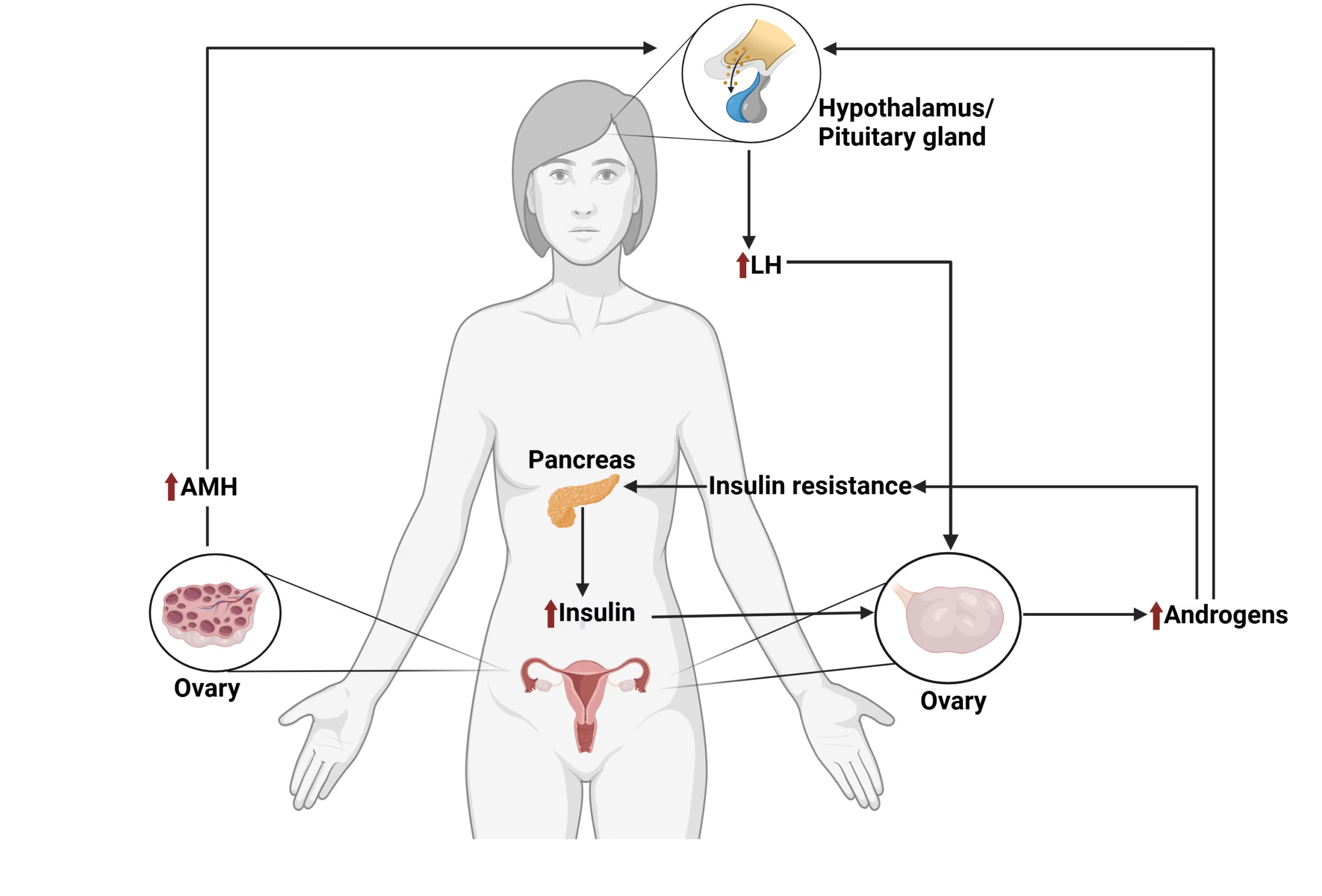
PCOS isn’t just one problem. It’s a chain reaction. And at the center of that chain is a deeper imbalance that quietly affects multiple systems in your body.
This article breaks it down in a way that actually makes sense, so you can stop guessing and start understanding what your body is trying to tell you.
What Is PCOS, Really?
Polycystic Ovary Syndrome is a hormonal condition that affects how your ovaries function. But it’s not just about the ovaries.
It involves:
- Hormones
- Metabolism
- Insulin response
- Inflammation
- Even stress signals
That’s why symptoms can look very different from one person to another.
Some women struggle with irregular periods. Others deal with weight gain, acne, or hair growth. And many experience all of it at once.
The Root Cause of PCOS Hormonal Imbalance
Let’s get straight to the point.
The root cause of PCOS hormonal imbalance is not just one thing. It’s usually a combination of:
- Insulin resistance
- Excess androgen production
- Chronic low-grade inflammation
- Disrupted brain-ovary communication
These factors feed into each other and create a cycle that keeps the imbalance going.
Insulin Resistance: The Hidden Driver
This is where things often begin.
Insulin is a hormone that helps your body use sugar for energy. But when your cells stop responding properly, your body produces more insulin to compensate.
That’s insulin resistance.
And here’s the important part:
High insulin levels directly stimulate your ovaries to produce more androgens, which are often called male hormones.
This leads to:
- Irregular ovulation
- Missed periods
- Acne
- Facial hair growth
- Difficulty losing weight
Even if your blood sugar looks “normal,” insulin resistance can still be present.
Androgens: Why Hormones Go Out of Balance
When androgen levels rise, everything starts to shift.
Your body needs a balance between estrogen, progesterone, and androgens. In PCOS, that balance tilts.
Too many androgens can:
- Prevent the release of eggs from the ovaries
- Disrupt menstrual cycles
- Trigger acne and oily skin
- Cause hair thinning or unwanted hair growth
This is why PCOS is often linked to irregular periods and fertility struggles.
Inflammation: The Silent Amplifier
Chronic low-grade inflammation doesn’t always show obvious symptoms, but it plays a powerful role in PCOS.
Inflammation can:
- Worsen insulin resistance
- Stimulate more androgen production
- Affect how your body processes hormones
It’s like adding fuel to an already burning fire.
Common contributors include:
- Processed foods
- Poor sleep
- Stress
- Environmental toxins
Brain-Ovary Connection: When Signals Get Confused
Your brain and ovaries are constantly communicating through hormones.
In PCOS, this communication gets disrupted.
The brain sends signals that lead to:
- Increased luteinizing hormone
- Reduced follicle-stimulating hormone balance
This imbalance prevents proper ovulation.
So even if your body is trying to ovulate, the signals aren’t coordinated correctly.
Why It Feels Like Everything Is Connected
Because it is.
- Insulin resistance increases androgens
- Androgens disrupt ovulation
- Lack of ovulation affects progesterone
- Low progesterone affects mood, cycles, and fertility
It’s a loop.
And unless the root cause is addressed, symptoms tend to keep coming back.
Different Types of PCOS Imbalance
Not all PCOS looks the same. Understanding your type can help you approach it more effectively.
Common patterns include:
- Insulin-resistant PCOS
- Inflammatory PCOS
- Adrenal PCOS linked to stress hormones
- Post-pill PCOS
Many women have a mix of these rather than just one.
How Lifestyle Triggers the Imbalance
Your daily habits can either calm the imbalance or make it worse.
Some common triggers:
- High sugar and refined carbohydrate intake
- Lack of physical activity
- Chronic stress
- Poor sleep patterns
This doesn’t mean lifestyle alone caused PCOS. But it can strongly influence how severe the symptoms become.
Can Hormonal Balance Be Restored?
Yes, but it takes a targeted approach.
Instead of just treating symptoms, the focus should be on correcting the underlying imbalance.
Here’s what helps:
Improving Insulin Sensitivity
- Balanced meals with protein, fiber, and healthy fats
- Reducing sugar spikes
- Regular movement
Supporting Hormonal Balance
- Prioritizing sleep
- Managing stress levels
- Eating nutrient-dense foods
Reducing Inflammation
- Whole foods over processed foods
- Anti-inflammatory nutrients
- Hydration
Supporting Ovulation Naturally
- Stable blood sugar
- Healthy body weight
- Consistent routines
Why “Quick Fixes” Don’t Work
It’s tempting to look for a single solution.
But PCOS doesn’t work that way.
- Crash diets can worsen hormones
- Over-exercising can increase stress hormones
- Ignoring insulin resistance keeps the cycle going
Real improvement comes from consistency, not extremes.
Emotional Impact of PCOS
This part is often overlooked.
Hormonal imbalance doesn’t just affect your body. It affects how you feel.
- Mood swings
- Anxiety
- Low confidence
- Frustration with symptoms
Understanding the root cause can actually reduce that stress, because things start to make sense.
The Good News
PCOS is manageable.
When you understand the root cause of the hormonal imbalance, your approach becomes clearer.
Instead of fighting your body, you start working with it.
And that’s where real change begins.
FAQs
What is the main root cause of PCOS hormonal imbalance?
The main root cause is often insulin resistance, which increases androgen levels and disrupts normal ovulation.
Can PCOS hormonal imbalance be reversed?
It can be managed effectively with lifestyle changes, medical support, and addressing underlying causes like insulin resistance and inflammation.
Why does PCOS cause irregular periods?
High androgen levels interfere with ovulation, leading to irregular or missed menstrual cycles.
Is weight gain a cause or symptom of PCOS?
It can be both. Insulin resistance can lead to weight gain, and excess weight can further worsen hormonal imbalance.
Does stress affect PCOS hormonal imbalance?
Yes, chronic stress can increase cortisol levels, which may worsen hormonal imbalance and PCOS symptoms.