If you have been researching PCOS supplements, myo-inositol has probably come up more than once.
It is one of the most studied natural supplements for PCOS, and the research behind it is genuinely encouraging. But the question most women actually want answered is simple: does it work, and how long does it take?
This guide breaks down what the research actually shows, realistic timelines for results, and what you can expect along the way.
What Is Myo-Inositol?
Myo-inositol is a naturally occurring compound, sometimes called vitamin B8, although it is not technically a vitamin.
Your body produces it naturally, and it also comes from foods like fruits, beans, grains, and nuts. It plays a key role in how your cells respond to insulin — which is exactly why it matters so much for PCOS.
Most women with PCOS have some degree of insulin resistance. Myo-inositol helps cells use insulin more efficiently, which can lower elevated insulin levels in the blood. Lower insulin means lower androgen production, since high insulin is one of the main triggers for excess androgen output in PCOS.
This single mechanism explains most of the benefits researchers have observed.
For a full understanding of how PCOS affects your hormones and metabolism, read our complete PCOS symptoms, causes, and treatment guide.
Does Myo-Inositol Actually Work for PCOS?
Yes — and the evidence behind it is stronger than most PCOS supplements on the market.
Multiple clinical trials and observational studies have tested myo-inositol specifically in women with PCOS. The results consistently show measurable improvements across several areas:
- Insulin sensitivity — Several studies show meaningful reductions in fasting insulin and improved insulin resistance markers (HOMA-IR).
- Menstrual regularity — One clinical study of 90 women with PCOS found that 68% restored regular menstrual cycles after six months of treatment.
- Hormone levels — A German observational study tracking over 3,600 women found that testosterone levels dropped significantly, from an average of 96.6 ng/ml to 43.3 ng/ml, after twelve weeks of treatment.
- Ovulation and fertility — In that same study, 70% of women experienced restored ovulation, and the pregnancy rate reached 15.1% across the full group.
These are not small, isolated findings. They come from peer-reviewed research published in respected medical journals, and the consistency across multiple independent studies adds real credibility to the results.
How Long Does It Take to See Results?
This is the part most women want a straight answer to. Here is what the research actually shows.
The first 4 to 6 weeks
Most women do not notice dramatic changes immediately. Myo-inositol works by gradually improving how your cells respond to insulin — and that process takes time to build.
Some women report subtle improvements in energy and reduced sugar cravings within the first few weeks, but this is not universal and should not be the benchmark for whether it is working.
8 to 12 weeks — the first major checkpoint
This is where the research consistently shows measurable change.
A widely cited German study found significant hormone shifts after twelve weeks of consistent use — testosterone dropped meaningfully, and ovulation was restored in the majority of participants. Most clinical trials use a minimum twelve-week period before evaluating outcomes, which tells you something important: this is not a fast-acting supplement.
If you are taking myo-inositol consistently, twelve weeks is the realistic point to evaluate whether it is making a difference for you specifically.
3 to 6 months — full effect
Several studies extend treatment to six months to observe the fullest range of benefits, including menstrual cycle regularity. One clinical study tracking 90 women over six months found 68% restored regular cycles by the end of that period.
This timeline matters because PCOS itself develops over years. Reversing some of its hormonal effects with a natural compound understandably takes sustained, consistent use — not a quick fix measured in days or weeks.
What Results Can You Realistically Expect?
Based on the available research, here is a realistic picture of what myo-inositol may help with — and the rough timeline for each:
- Improved insulin sensitivity — often the earliest measurable change, sometimes detectable within 8 to 12 weeks through blood tests
- Reduced androgen levels — meaningful drops typically appear around the 12-week mark
- More regular ovulation — many women see this develop between 8 and 16 weeks
- More regular periods — usually follows improved ovulation, often noticeable within 2 to 4 months
- Improved fertility outcomes — studies tracking pregnancy rates generally measured outcomes over 2 to 3 months of consistent use
- Some improvement in acne and skin symptoms — tends to follow hormonal shifts, typically appearing after androgen levels have already started dropping
Not every woman experiences every benefit, and individual response varies based on PCOS type, baseline insulin resistance, and consistency of use.
What Dosage Does the Research Use?
This matters significantly, because taking too little will not produce the results seen in clinical studies.
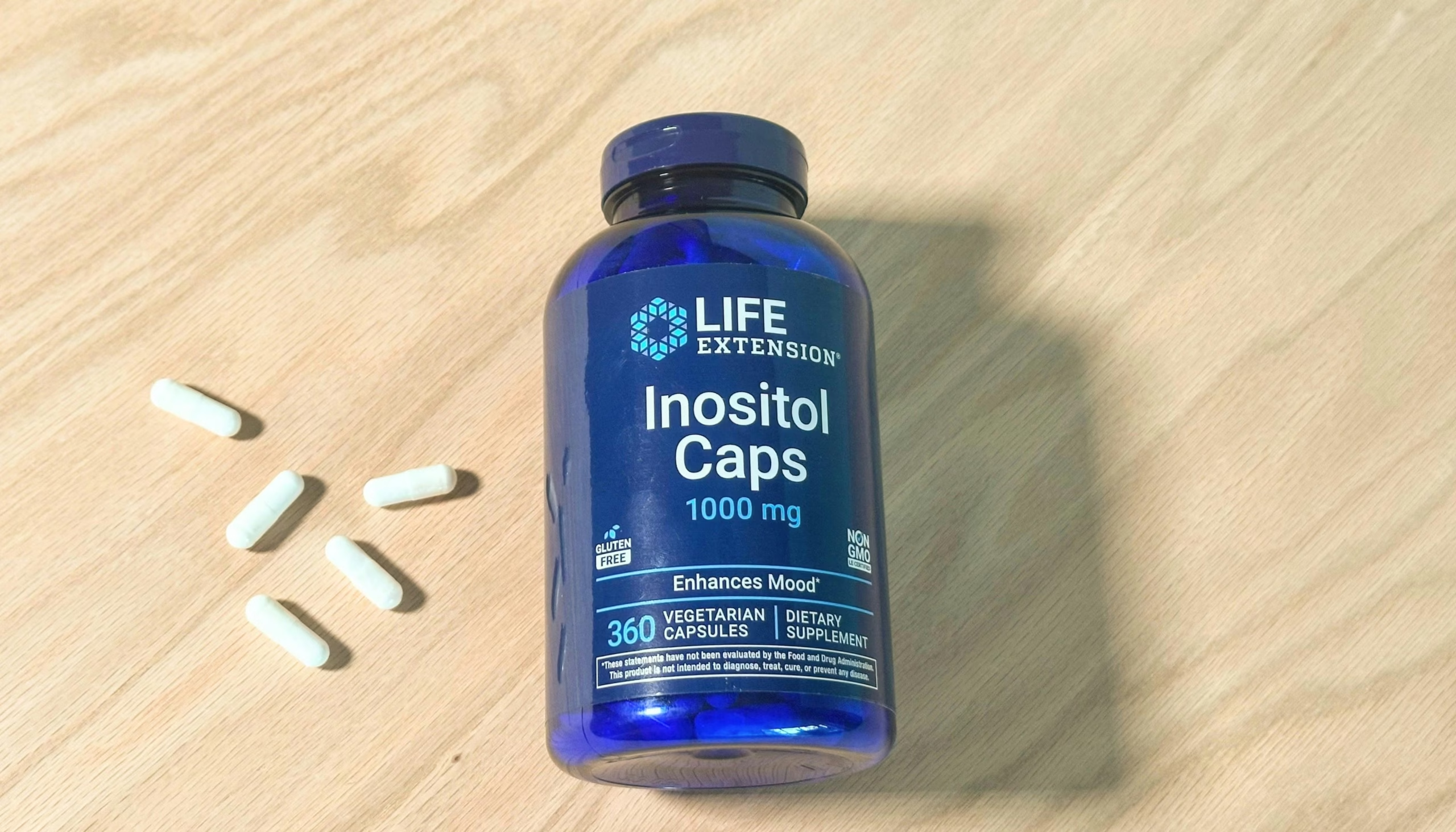
The most consistently studied and effective dose across research is 4,000 mg (4 grams) of myo-inositol per day, typically split into two doses of 2,000 mg each — one in the morning and one in the evening.
Many studies combine myo-inositol with 400 micrograms of folic acid, since this combination appears in several of the strongest clinical trials and may offer added benefit, particularly for women trying to conceive.
A few important dosage notes:
- Doses below 2,000 mg per day are less studied for PCOS specifically and may produce weaker results
- Doses above 4,000 mg per day are not typically necessary and have not shown additional benefit for PCOS in research
- Myo-inositol is generally well tolerated, with mild digestive discomfort occurring mainly at very high doses above 12 grams
- It can be taken with or without food, and the powder form mixes easily into water or juice
Always speak with your doctor before starting any new supplement, particularly if you are on other medications or trying to conceive.
Myo-Inositol vs D-Chiro-Inositol — What Is the Difference?
You may also come across D-chiro-inositol (DCI) when researching PCOS supplements. The two are related but not identical, and the distinction matters.
Myo-inositol and D-chiro-inositol are both forms of inositol, but they work through slightly different pathways in the body. Myo-inositol is by far the more extensively studied form for PCOS specifically, with a stronger and more consistent evidence base.
Some supplements combine both forms, typically in a 40:1 ratio of myo-inositol to D-chiro-inositol, since this roughly mirrors the natural ratio found in healthy ovarian tissue.
One important caution: research suggests that very high doses of D-chiro-inositol alone, without the corresponding myo-inositol balance, may actually worsen ovarian function in some studies. This makes the ratio important, not just the total inositol amount. If choosing a combination product, the 40:1 ratio is the one supported by the strongest research.
Myo-Inositol vs Metformin — How Do They Compare?
Metformin is the most commonly prescribed medication for PCOS-related insulin resistance, so comparisons between the two come up often.
A 2026 phase III clinical trial compared a combination of metformin and myo-inositol against metformin alone in 196 women with PCOS over 24 weeks. The combination group showed significantly better improvement in insulin resistance — 75% of women improved, compared to 61% in the metformin-only group.
This does not mean myo-inositol should replace metformin if your doctor has prescribed it. But the research suggests the two may work well together, and myo-inositol may offer a gentler, supplement-based option for women who experience digestive side effects from metformin or prefer a non-prescription approach.
This is a conversation worth having directly with your doctor, since individual circumstances vary significantly.
Who Tends to Benefit Most From Myo-Inositol?
Not every woman with PCOS responds the same way. Based on the research, myo-inositol tends to show the strongest results for:
- Women with insulin-resistant PCOS, the most common PCOS type
- Women with irregular or absent ovulation
- Women trying to conceive, particularly when combined with folic acid
- Women looking for a non-prescription option to support insulin sensitivity
- Women experiencing elevated androgen symptoms like acne or excess hair growth
Women with other underlying causes of PCOS, such as adrenal-related or inflammatory PCOS, may see more modest results from inositol alone and might benefit from combining it with other targeted lifestyle and medical approaches.
What to Expect While Taking Myo-Inositol
Setting realistic expectations makes the process far less frustrating.
In the first month, do not expect dramatic visible changes. Internal insulin sensitivity may be shifting before you notice anything externally.
Around the two to three month mark, pay attention to subtle signs — slightly more regular cycle timing, less intense sugar cravings, or improved energy stability throughout the day.
By month three to six, if myo-inositol is working for you, the changes tend to become more noticeable — more predictable cycles, clearer skin, and for some women, restored ovulation confirmed through tracking or blood work.
If you reach the six-month mark with no noticeable change at all, it is worth discussing with your doctor. Myo-inositol does not work identically for everyone, and your treatment plan may need adjustment.
Final Thoughts
Myo-inositol is one of the more genuinely well-researched natural options for managing PCOS, particularly for insulin resistance, irregular ovulation, and elevated androgens.
But it is not a fast fix. The research consistently points to a timeline of three to six months for meaningful results, with the most significant data points appearing around the twelve-week mark.
If you decide to try it, consistency matters more than anything else. Take it daily at the research-backed dose, give it the full timeline the studies suggest, and track your symptoms along the way so you and your doctor can evaluate whether it is genuinely working for your body.
For the complete picture of PCOS — including causes, types, diagnosis, and the full range of treatment options — visit our comprehensive PCOS guide.
This article is for informational purposes and does not replace medical advice. Speak with your doctor before starting any new supplement, especially if you are pregnant, trying to conceive, or taking other medications.
FAQs
Q1. How long does myo-inositol take to work for PCOS?
Most research shows measurable hormonal changes around 8 to 12 weeks of consistent use, with the fullest benefits — including more regular periods and improved ovulation — appearing between 3 and 6 months.
Q2. What is the correct myo-inositol dosage for PCOS?
Most clinical studies use 4,000 mg per day, split into two doses of 2,000 mg, often combined with 400 micrograms of folic acid. This is the dose most strongly supported by research for PCOS-related insulin resistance.
Q3. Does myo-inositol help with PCOS weight loss?
Myo-inositol does not directly cause weight loss, but by improving insulin sensitivity, it may make weight management easier for some women with PCOS, especially when combined with diet and exercise.
Q4. Can myo-inositol help with PCOS fertility?
Yes. Research shows myo-inositol, often combined with folic acid, can help restore ovulation in many women with PCOS. One large observational study found a 15.1% pregnancy rate among women using it consistently over several months.
Q5. Is myo-inositol safe to take long term?
Myo-inositol is generally well tolerated, even with long-term use. Mild digestive side effects can occur at very high doses, typically above 12 grams daily, which is far above the standard PCOS dose of 4 grams.
Q6. Can I take myo-inositol with metformin?
Some research suggests combining myo-inositol with metformin may improve insulin resistance more than metformin alone. However, always consult your doctor before combining any supplement with prescription medication.