
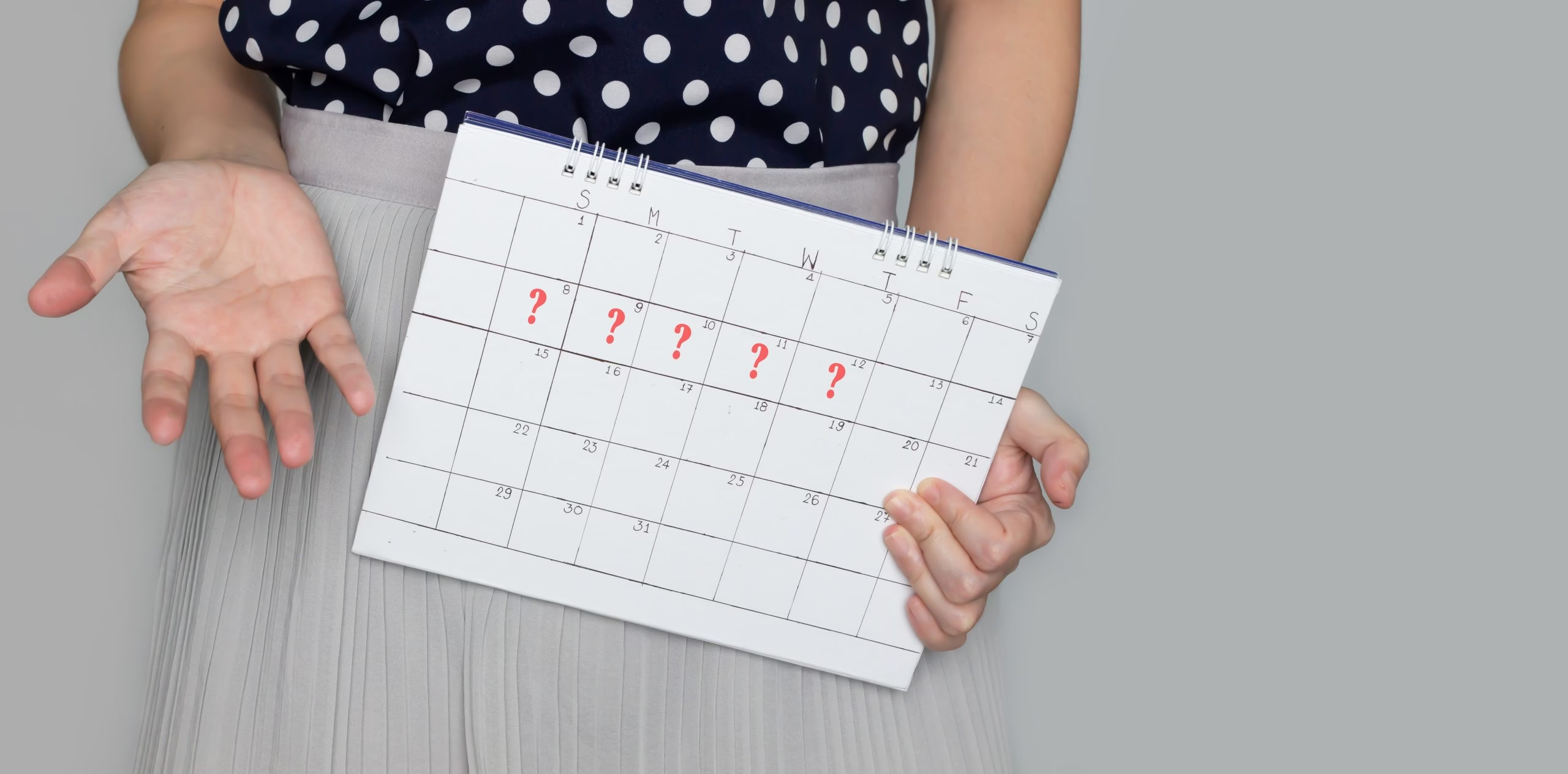
You track your period for months. It shows up on day 24, then day 41, then not at all. Then you start to wonder if your cycle is the reason you’re not getting pregnant.
You’re not alone. Many women deal with irregular periods and trouble getting pregnant at the same time. The link is real. But it isn’t a life sentence.
Here’s the short version. Your cycle gives you clues about ovulation. When your cycle swings, ovulation often swings with it. And ovulation is the one thing you need for a natural pregnancy.
This post is part of our female fertility guide. Here, we zoom in on one piece of the puzzle: how an unpredictable cycle affects your chances. You’ll learn what counts as normal, what causes changes, and what you can do about it.
Let’s start with the basics.
What Counts as an Irregular Cycle?
A “normal” cycle is wider than most people think. Doctors count from the first day of one period to the first day of the next.
For most adults, a healthy cycle looks like this:
- Cycle length: 21 to 35 days
- Period length: 2 to 7 days
- Variation: no more than about 7 to 9 days between your shortest and longest cycle
Signs your cycle may be irregular
Your cycle might be irregular if you notice any of these:
- Cycles shorter than 21 days or longer than 35 days
- Lengths that change a lot from month to month
- Periods that skip for three months or more
- Very heavy bleeding, or very light spotting
- Bleeding between periods
One odd cycle isn’t a red flag. Travel, illness, and stress can nudge things off track for a month. Patterns matter more than single cycles.
Why this matters for fertility
A regular cycle usually points to regular ovulation. That makes it easier to time sex and predict your fertile days. A cycle that keeps changing makes both harder.
It can also hint at an underlying issue worth checking. Our guide to the early signs of fertility issues in women lists other clues to watch for.
Why Ovulation Is the Missing Link
Pregnancy needs an egg. Your ovary releases that egg during ovulation, usually about 14 days before your next period.
When your cycle is predictable, ovulation tends to be predictable too. When it isn’t, ovulation can move around. In some months, it may not happen at all.
What happens without ovulation
Some cycles are “anovulatory.” You may still bleed, but your body didn’t release an egg. That bleed can look like a normal period, so it’s easy to miss.
No egg means no chance of pregnancy that month. That’s the main reason irregular periods and trouble getting pregnant often show up together.
Late ovulation counts too
Even when you do ovulate, it may happen late. Say you ovulate on day 28 instead of day 14. Your period then arrives later, and the timing of sex matters a lot. You might miss your fertile window simply because you expected it earlier.
A short luteal phase can also play a role. That’s the stretch between ovulation and your period. If it’s too short, the uterine lining may not support an early pregnancy well.
The takeaway
The cycle itself isn’t the real problem. Ovulation is. Your cycle just gives you the clues. To learn how to spot those clues, read our guide on how to track ovulation naturally at home.
Hormone-Related Causes
Hormones run your cycle. When one gets out of balance, ovulation can stall. These are the most common culprits.
PCOS
Polycystic ovary syndrome is a top cause of irregular cycles linked to fertility. Higher androgen levels interfere with the signals your ovaries need. Eggs may not mature or release on schedule.
Other signs include acne, extra hair growth, and thinning scalp hair. Many women with PCOS do get pregnant, often with some support. Our guide on getting pregnant with PCOS explains your chances.
Thyroid problems
Your thyroid controls your metabolism, and it also affects your cycle. An underactive thyroid can cause heavy, long, or missed periods. An overactive one can make them shorter or lighter.
A simple blood test checks thyroid function. Treatment is often straightforward and can bring cycles back to normal.
High prolactin
Prolactin is the hormone that supports milk production. When levels rise outside of pregnancy or breastfeeding, ovulation can pause. Causes include certain medicines, stress, and small, harmless growths on the pituitary gland.
Early ovarian decline
Some women run low on eggs earlier than expected. Cycles often turn irregular before they stop altogether. If you’re under 40 and your periods keep shifting, ask your doctor about this.
Each of these is treatable or manageable. That’s why finding the cause matters more than guessing.
Lifestyle Causes
Not every irregular cycle points to a medical condition. Daily habits can shift your hormones too.
Stress
Stress raises cortisol. High cortisol can quiet the signals that trigger ovulation. That’s why a rough month at work can delay your period.
Short bursts of stress rarely cause lasting harm. Long stretches of it can.
Weight changes
Body fat helps your body make estrogen. Being underweight can drop estrogen so low that periods stop. Carrying extra weight can raise insulin and disrupt ovulation in a different way.
The good news is that small changes can help. Losing 5 to 10 percent of body weight can help some women with excess weight ovulate more regularly.
Too much exercise
Movement is healthy. But hard training with too little food can switch off ovulation. Athletes often notice this first.
Not eating enough
Skipping meals or cutting calories sharply tells your body it isn’t safe to ovulate. That’s a survival response, not a flaw.
Poor sleep
Night shifts, late nights, and broken sleep disturb your body clock. Your cycle follows that clock.
These causes often reverse once habits improve. For a wider look at what can affect fertility, read top causes of infertility in women.
Can You Get Pregnant With Irregular Cycles?
Yes, many women do. Irregular doesn’t mean impossible. It means the timing is harder to pin down, and it may take longer.
What the odds look like
A healthy couple under 35 with well-timed sex has roughly a 20 to 25 percent chance of pregnancy each month. With irregular cycles, ovulation happens less often. That lowers the odds per month and can stretch the timeline.
Here’s what that means in plain terms:
- You may ovulate only a few times a year
- Each missed ovulation is one missed chance
- Fewer chances add up to a longer wait
That’s why irregular periods and trouble getting pregnant can feel so frustrating. You’re doing the work, but your body isn’t giving you many chances to succeed.
What helps
Most women who ovulate, even rarely, can still conceive. The goal is to catch your fertile days when they do come. Treating the root cause helps too. Many women conceive within months of treatment or steady lifestyle changes.
A note on age
Age changes the picture. Under 35, you can wait a bit longer before asking for help. Over 35, the clock moves faster. Our female fertility guide covers the age timeline in detail. If you feel worried, don’t wait.
How to Track Ovulation When Cycles Vary
Calendar apps assume a 28-day cycle. If yours isn’t, they’ll guess wrong. Use your body’s signs instead, and combine two or three methods for the clearest picture.
Cervical mucus
Around ovulation, mucus turns clear, stretchy, and slippery, like raw egg white. It’s free and easy to check. Learn more in cervical mucus and fertility: what to look for.
Basal body temperature
Your temperature rises slightly after ovulation. You take it every morning before you get out of bed. It confirms ovulation after the fact, and patterns show up over a few months. Try our simple guide to basal body temperature charting.
Ovulation predictor kits
These urine strips detect the LH surge that comes before ovulation. They can mislead you if your cycle is very irregular, or if you have PCOS, because LH may stay high. Read do ovulation predictor kits actually work? for tips.
Tips for better tracking
- Track for at least three months
- Write down period dates, mucus changes, and temperatures
- Start testing with strips earlier than the box suggests
- Share your notes with your doctor
If you have PCOS, our post on how to track ovulation with PCOS can help.
Everyday Steps That Support Regular Cycles
Habits can’t fix every cause. But these steps help many women.
Eat to support your hormones
- Fill half your plate with vegetables and fruit
- Pair carbs with protein and healthy fat
- Choose whole grains over refined ones
- Limit sugary drinks and ultra-processed snacks
Steady blood sugar helps steady your hormones. This matters even more with PCOS.
Move in a balanced way
Aim for about 30 minutes of movement most days. Walking, strength training, and yoga all work well. Avoid pushing hard every single day.
Manage stress
Pick one small habit you’ll actually keep. Try a 10-minute walk, five minutes of deep breathing, or a phone-free hour before bed.
Protect your sleep
Aim for seven to nine hours. Keep a steady bedtime when you can.
Ask about supplements
Some women with PCOS use myo-inositol. Doctors also prescribe metformin in some cases. Please don’t start either without medical advice.
Give it time
Eggs take about three months to mature. So give new habits a full three cycles before you judge the results.
When to See a Doctor
Don’t wait a full year if your cycles are clearly off. Seek help sooner if:
- Your periods come less than 21 or more than 35 days apart
- You skip three or more periods in a row
- You’re under 35 and have tried for 12 months
- You’re 35 or older and have tried for six months
- You have severe pain or very heavy bleeding
- You’ve had two or more miscarriages
Seeing a doctor isn’t giving up. It gets you answers faster.
Tests your doctor may order
- Blood tests for FSH, LH, estrogen, and thyroid hormones
- Prolactin and AMH levels
- A pelvic ultrasound
- A progesterone test about a week after ovulation, to confirm it happened
- A semen analysis for your partner
Bring your tracking notes. Dates, symptoms, and temperature charts save time and give your doctor useful clues.
Treatment options
- Lifestyle changes as a first step
- Treating the cause, such as thyroid medicine
- Ovulation-inducing medicine like letrozole or clomiphene
- IUI or IVF if other treatments don’t work
The right path depends on your age, test results, and goals. A fertility specialist can map out the best plan with you.
Final Thoughts
The link between your cycle and your fertility is real. In many cases, it’s also fixable.
Here’s what to remember:
- Irregular cycles often mean irregular ovulation
- Many causes, like PCOS, thyroid issues, and stress, can be treated
- Tracking body signs works better than counting days
- Healthy habits help, but they take time
- Ask for help early if something feels off
If you’re facing irregular periods and trouble getting pregnant, it’s easy to blame yourself. Please don’t. Your body is giving you information, not passing judgment.
Be patient with yourself, and lean on your partner or a friend. If online advice has you doubting everything, our post on fertility myths vs facts may ease your mind.
Ready for the full picture? Head back to our female fertility guide for everything in one place.
This post is for information only. It doesn’t replace advice from a qualified healthcare provider.
FAQs
Can irregular periods make it harder to get pregnant?
Yes. Irregular cycles often mean you ovulate less often. Fewer ovulations mean fewer chances to conceive each year.
How do I know if I’m ovulating with irregular cycles?
Watch for stretchy, clear mucus and a rise in morning temperature. Ovulation tests can help, but they work best with other signs.
Can I get pregnant if my period is late every month?
Yes, you can. Late periods often mean late ovulation. Tracking your body signs helps you find your fertile window.
Does PCOS always cause irregular periods?
No. Most women with PCOS have irregular cycles, but some have regular ones. A doctor can confirm it with tests.
Can stress delay ovulation?
It can. High stress hormones may quiet the signals that trigger ovulation. Your period then arrives later than usual.
How long should I try before seeing a doctor?
See a doctor after 12 months if you’re under 35, or six months if you’re 35 or older. Go sooner if your cycles are very irregular.
Can lifestyle changes bring my cycle back on track?
Often, yes. Balanced meals, steady sleep, moderate exercise, and stress care help many women. Give new habits about three months.