Categories
Fertility

Irregular Cycles and Fertility: What’s the Real Connection?

You track your period for months. It shows up on day 24, then day 41, then not at all. Then you start to wonder if your cycle is the reason you’re not getting pregnant.

You’re not alone. Many women deal with irregular periods and trouble getting pregnant at the same time. The link is real. But it isn’t a life sentence.

Here’s the short version. Your cycle gives you clues about ovulation. When your cycle swings, ovulation often swings with it. And ovulation is the one thing you need for a natural pregnancy.

This post is part of our female fertility guide. Here, we zoom in on one piece of the puzzle: how an unpredictable cycle affects your chances. You’ll learn what counts as normal, what causes changes, and what you can do about it.

Let’s start with the basics.

What Counts as an Irregular Cycle?

A “normal” cycle is wider than most people think. Doctors count from the first day of one period to the first day of the next.

For most adults, a healthy cycle looks like this:

  • Cycle length: 21 to 35 days
  • Period length: 2 to 7 days
  • Variation: no more than about 7 to 9 days between your shortest and longest cycle

Signs your cycle may be irregular

Your cycle might be irregular if you notice any of these:

  • Cycles shorter than 21 days or longer than 35 days
  • Lengths that change a lot from month to month
  • Periods that skip for three months or more
  • Very heavy bleeding, or very light spotting
  • Bleeding between periods

One odd cycle isn’t a red flag. Travel, illness, and stress can nudge things off track for a month. Patterns matter more than single cycles.

Why this matters for fertility

A regular cycle usually points to regular ovulation. That makes it easier to time sex and predict your fertile days. A cycle that keeps changing makes both harder.

It can also hint at an underlying issue worth checking. Our guide to the early signs of fertility issues in women lists other clues to watch for.

Why Ovulation Is the Missing Link

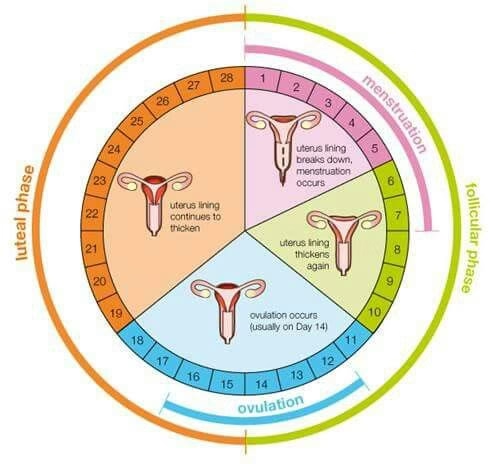
Pregnancy needs an egg. Your ovary releases that egg during ovulation, usually about 14 days before your next period.

When your cycle is predictable, ovulation tends to be predictable too. When it isn’t, ovulation can move around. In some months, it may not happen at all.

What happens without ovulation

Some cycles are “anovulatory.” You may still bleed, but your body didn’t release an egg. That bleed can look like a normal period, so it’s easy to miss.

No egg means no chance of pregnancy that month. That’s the main reason irregular periods and trouble getting pregnant often show up together.

Late ovulation counts too

Even when you do ovulate, it may happen late. Say you ovulate on day 28 instead of day 14. Your period then arrives later, and the timing of sex matters a lot. You might miss your fertile window simply because you expected it earlier.

A short luteal phase can also play a role. That’s the stretch between ovulation and your period. If it’s too short, the uterine lining may not support an early pregnancy well.

The takeaway

The cycle itself isn’t the real problem. Ovulation is. Your cycle just gives you the clues. To learn how to spot those clues, read our guide on how to track ovulation naturally at home.

Hormone-Related Causes

Hormones run your cycle. When one gets out of balance, ovulation can stall. These are the most common culprits.

PCOS

Polycystic ovary syndrome is a top cause of irregular cycles linked to fertility. Higher androgen levels interfere with the signals your ovaries need. Eggs may not mature or release on schedule.

Other signs include acne, extra hair growth, and thinning scalp hair. Many women with PCOS do get pregnant, often with some support. Our guide on getting pregnant with PCOS explains your chances.

Thyroid problems

Your thyroid controls your metabolism, and it also affects your cycle. An underactive thyroid can cause heavy, long, or missed periods. An overactive one can make them shorter or lighter.

A simple blood test checks thyroid function. Treatment is often straightforward and can bring cycles back to normal.

High prolactin

Prolactin is the hormone that supports milk production. When levels rise outside of pregnancy or breastfeeding, ovulation can pause. Causes include certain medicines, stress, and small, harmless growths on the pituitary gland.

Early ovarian decline

Some women run low on eggs earlier than expected. Cycles often turn irregular before they stop altogether. If you’re under 40 and your periods keep shifting, ask your doctor about this.

Each of these is treatable or manageable. That’s why finding the cause matters more than guessing.

Lifestyle Causes

Not every irregular cycle points to a medical condition. Daily habits can shift your hormones too.

Stress

Stress raises cortisol. High cortisol can quiet the signals that trigger ovulation. That’s why a rough month at work can delay your period.

Short bursts of stress rarely cause lasting harm. Long stretches of it can.

Weight changes

Body fat helps your body make estrogen. Being underweight can drop estrogen so low that periods stop. Carrying extra weight can raise insulin and disrupt ovulation in a different way.

The good news is that small changes can help. Losing 5 to 10 percent of body weight can help some women with excess weight ovulate more regularly.

Too much exercise

Movement is healthy. But hard training with too little food can switch off ovulation. Athletes often notice this first.

Not eating enough

Skipping meals or cutting calories sharply tells your body it isn’t safe to ovulate. That’s a survival response, not a flaw.

Poor sleep

Night shifts, late nights, and broken sleep disturb your body clock. Your cycle follows that clock.

These causes often reverse once habits improve. For a wider look at what can affect fertility, read top causes of infertility in women.

Can You Get Pregnant With Irregular Cycles?

Yes, many women do. Irregular doesn’t mean impossible. It means the timing is harder to pin down, and it may take longer.

What the odds look like

A healthy couple under 35 with well-timed sex has roughly a 20 to 25 percent chance of pregnancy each month. With irregular cycles, ovulation happens less often. That lowers the odds per month and can stretch the timeline.

Here’s what that means in plain terms:

  • You may ovulate only a few times a year
  • Each missed ovulation is one missed chance
  • Fewer chances add up to a longer wait

That’s why irregular periods and trouble getting pregnant can feel so frustrating. You’re doing the work, but your body isn’t giving you many chances to succeed.

What helps

Most women who ovulate, even rarely, can still conceive. The goal is to catch your fertile days when they do come. Treating the root cause helps too. Many women conceive within months of treatment or steady lifestyle changes.

A note on age

Age changes the picture. Under 35, you can wait a bit longer before asking for help. Over 35, the clock moves faster. Our female fertility guide covers the age timeline in detail. If you feel worried, don’t wait.

How to Track Ovulation When Cycles Vary

Calendar apps assume a 28-day cycle. If yours isn’t, they’ll guess wrong. Use your body’s signs instead, and combine two or three methods for the clearest picture.

Cervical mucus

Around ovulation, mucus turns clear, stretchy, and slippery, like raw egg white. It’s free and easy to check. Learn more in cervical mucus and fertility: what to look for.

Basal body temperature

Your temperature rises slightly after ovulation. You take it every morning before you get out of bed. It confirms ovulation after the fact, and patterns show up over a few months. Try our simple guide to basal body temperature charting.

Ovulation predictor kits

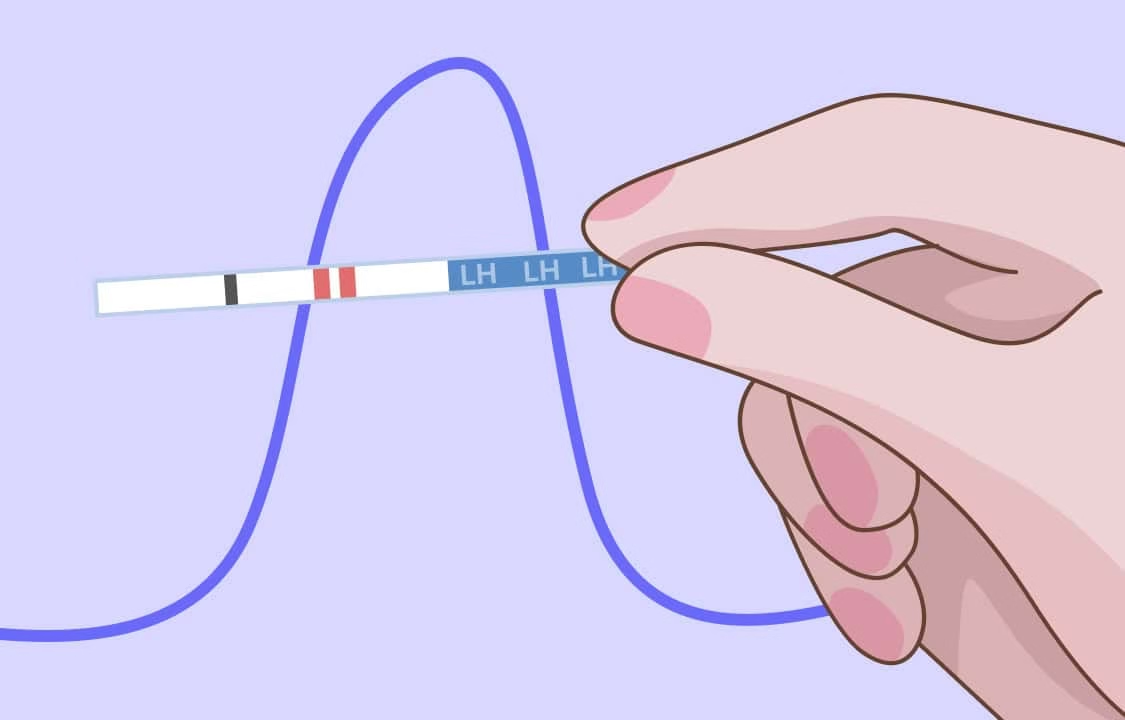
These urine strips detect the LH surge that comes before ovulation. They can mislead you if your cycle is very irregular, or if you have PCOS, because LH may stay high. Read do ovulation predictor kits actually work? for tips.

Tips for better tracking

  1. Track for at least three months
  2. Write down period dates, mucus changes, and temperatures
  3. Start testing with strips earlier than the box suggests
  4. Share your notes with your doctor

If you have PCOS, our post on how to track ovulation with PCOS can help.

Everyday Steps That Support Regular Cycles

Habits can’t fix every cause. But these steps help many women.

Eat to support your hormones

  • Fill half your plate with vegetables and fruit
  • Pair carbs with protein and healthy fat
  • Choose whole grains over refined ones
  • Limit sugary drinks and ultra-processed snacks

Steady blood sugar helps steady your hormones. This matters even more with PCOS.

Move in a balanced way

Aim for about 30 minutes of movement most days. Walking, strength training, and yoga all work well. Avoid pushing hard every single day.

Manage stress

Pick one small habit you’ll actually keep. Try a 10-minute walk, five minutes of deep breathing, or a phone-free hour before bed.

Protect your sleep

Aim for seven to nine hours. Keep a steady bedtime when you can.

Ask about supplements

Some women with PCOS use myo-inositol. Doctors also prescribe metformin in some cases. Please don’t start either without medical advice.

Give it time

Eggs take about three months to mature. So give new habits a full three cycles before you judge the results.

When to See a Doctor

Don’t wait a full year if your cycles are clearly off. Seek help sooner if:

  • Your periods come less than 21 or more than 35 days apart
  • You skip three or more periods in a row
  • You’re under 35 and have tried for 12 months
  • You’re 35 or older and have tried for six months
  • You have severe pain or very heavy bleeding
  • You’ve had two or more miscarriages

Seeing a doctor isn’t giving up. It gets you answers faster.

Tests your doctor may order

  1. Blood tests for FSH, LH, estrogen, and thyroid hormones
  2. Prolactin and AMH levels
  3. A pelvic ultrasound
  4. A progesterone test about a week after ovulation, to confirm it happened
  5. A semen analysis for your partner

Bring your tracking notes. Dates, symptoms, and temperature charts save time and give your doctor useful clues.

Treatment options

  • Lifestyle changes as a first step
  • Treating the cause, such as thyroid medicine
  • Ovulation-inducing medicine like letrozole or clomiphene
  • IUI or IVF if other treatments don’t work

The right path depends on your age, test results, and goals. A fertility specialist can map out the best plan with you.

Final Thoughts

The link between your cycle and your fertility is real. In many cases, it’s also fixable.

Here’s what to remember:

  1. Irregular cycles often mean irregular ovulation
  2. Many causes, like PCOS, thyroid issues, and stress, can be treated
  3. Tracking body signs works better than counting days
  4. Healthy habits help, but they take time
  5. Ask for help early if something feels off

If you’re facing irregular periods and trouble getting pregnant, it’s easy to blame yourself. Please don’t. Your body is giving you information, not passing judgment.

Be patient with yourself, and lean on your partner or a friend. If online advice has you doubting everything, our post on fertility myths vs facts may ease your mind.

Ready for the full picture? Head back to our female fertility guide for everything in one place.

This post is for information only. It doesn’t replace advice from a qualified healthcare provider.

FAQs

Can irregular periods make it harder to get pregnant?

Yes. Irregular cycles often mean you ovulate less often. Fewer ovulations mean fewer chances to conceive each year.

How do I know if I’m ovulating with irregular cycles?

Watch for stretchy, clear mucus and a rise in morning temperature. Ovulation tests can help, but they work best with other signs.

Can I get pregnant if my period is late every month?

Yes, you can. Late periods often mean late ovulation. Tracking your body signs helps you find your fertile window.

Does PCOS always cause irregular periods?

No. Most women with PCOS have irregular cycles, but some have regular ones. A doctor can confirm it with tests.

Can stress delay ovulation?

It can. High stress hormones may quiet the signals that trigger ovulation. Your period then arrives later than usual.

How long should I try before seeing a doctor?

See a doctor after 12 months if you’re under 35, or six months if you’re 35 or older. Go sooner if your cycles are very irregular.

Can lifestyle changes bring my cycle back on track?

Often, yes. Balanced meals, steady sleep, moderate exercise, and stress care help many women. Give new habits about three months.

Categories
Fertility

Cervical Mucus and Fertility: What to Look For

Trying to conceive can feel like a guessing game. You may use apps, kits, and calendars to find your fertile days. But your body gives you a free clue every single day. That clue is cervical mucus.

Cervical mucus is the fluid made by your cervix. It changes in look, feel, and amount through your cycle. Once you learn about cervical mucus changes during ovulation, you can spot your most fertile days with confidence. It costs nothing, and you can start today.

This post is part of our fertility series. For the full picture on boosting your chances of pregnancy, read our female fertility guide. Here, we zoom in on one sign. You will learn what your mucus means and how to track it.

What Is Cervical Mucus?

Cervical mucus is a mix of water, salts, and proteins. Glands in your cervix make it. Your hormones control how much you make and how it feels.

Why It Matters for Pregnancy

Think of cervical mucus as a gatekeeper. On some days, it blocks the door. On other days, it opens the door and helps sperm swim through. Fertile mucus does three important jobs:

  • It protects sperm from the natural acidity of the vagina.
  • It feeds sperm with the energy they need to travel.
  • It guides sperm up through the cervix toward the egg.

Without this help, sperm may not live long enough to reach the egg. That is why mucus is such a strong sign of fertility.

Is Vaginal Discharge Normal?

Yes. Most women have some discharge, and the amount varies from person to person. What matters most is your own pattern over time.

How Hormones Control Your Mucus

Two hormones run the show: estrogen and progesterone. Each one gives your mucus a different texture.

Estrogen Opens the Door

After your period, estrogen starts to rise. As it climbs, your cervix makes more mucus. The mucus also becomes thinner, wetter, and clearer. Estrogen peaks just before ovulation. That peak creates the most fertile mucus of your whole cycle.

Progesterone Closes It

After your ovary releases an egg, progesterone takes over. Progesterone thickens the mucus again. The thick mucus forms a plug that blocks the cervix. Your body does this to protect a possible pregnancy.

A Quick Way to Remember

  • Rising estrogen means wetter, clearer, stretchier mucus.
  • Rising progesterone means thicker, stickier, or drier mucus.

The Five Stages of Cervical Mucus

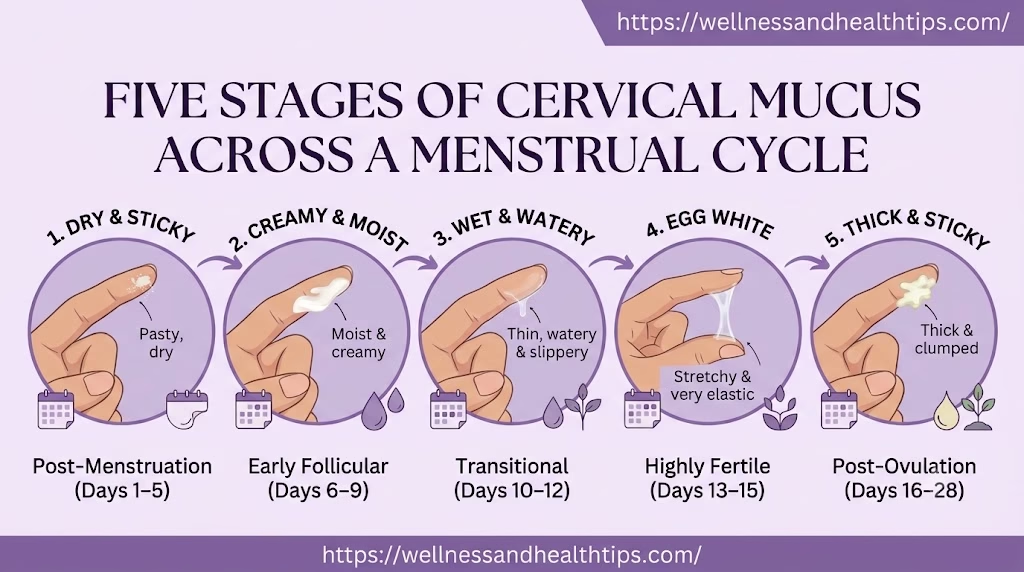
Every cycle is different, but most people notice the same five stages. Here is how cervical mucus changes during ovulation and the days around it. The day ranges below fit a 28-day cycle. Yours may shift earlier or later.

Stage 1: Dry Days

Right after your period ends, you may see little or no mucus. You may feel dry. Fertility is low at this point. This stage often falls around days 5 to 7.

Stage 2: Sticky Mucus

Next, you may notice small amounts of thick, tacky mucus. It looks white or pale yellow and feels sticky or crumbly. Sperm have a hard time moving through it. This stage often falls around days 8 to 9.

Stage 3: Creamy Mucus

As estrogen rises, mucus turns creamy. It feels like lotion and looks white or cloudy. Your fertility is starting to climb. This stage often falls around days 10 to 11.

Stage 4: Watery Mucus

Soon the mucus becomes thin and clear. You may feel wet or see a damp spot on your underwear. Your fertile window is now open. This stage often falls around days 12 to 13.

Stage 5: Egg White Mucus

This is the peak stage. The mucus looks clear, slippery, and stretchy, like raw egg white. You can often stretch it an inch or more between your fingers. This is your most fertile time, often around days 13 to 15.

What Happens After Ovulation

Once your ovary releases the egg, progesterone rises. Mucus quickly turns thick, sticky, or creamy again. Many people feel dry within a day or two.

Spotting Your Peak Day

Your peak day is the last day you notice wet, slippery, or stretchy mucus. Ovulation usually happens on or close to that day. You only know your peak day after it has passed. A few days of tracking make it easier to spot.

What About Early Pregnancy?

If the egg is fertilized, mucus stays thick and creamy. Some people notice more white discharge in early pregnancy. This is not a reliable sign, so take a pregnancy test to be sure.

Your Fertile Window

Sperm can live up to five days inside fertile mucus. An egg survives just 12 to 24 hours after release. So your fertile window lasts about six days. It includes the five days before ovulation, plus ovulation day.

Wet, slippery mucus tells you the window is open. Sex on these days gives sperm a ready path to the egg. You do not have to wait for the very last day.

Best Days to Try

  1. The first day you notice watery mucus.
  2. Every day of egg white mucus.
  3. Your peak day and the day after.

Most doctors suggest sex every one to two days during this time. This keeps fresh sperm waiting when the egg arrives. It also feels less stressful than timing one exact day.

How to Check Your Cervical Mucus

You do not need special tools. A few clean habits are enough.

Three Simple Methods

  1. Toilet paper: Before you urinate, wipe from front to back. Look at the mucus on the paper.
  2. Underwear: At the end of the day, look at your underwear or liner.
  3. Fingers: Wash your hands first. Gently wipe the vaginal opening and check your fingertip. Then press your finger and thumb together and pull them apart to test the stretch.

Many people find the finger method the most accurate. Choose the one that feels most comfortable to you.

What to Write Down

Each day, record three things:

  • Feel: dry, damp, wet, or slippery.
  • Look: clear, cloudy, white, or creamy.
  • Stretch: none, short, or over an inch.

Use a notebook or a fertility app. Note the most fertile type you saw that day.

Tips for Better Results

  • Check at the same times each day.
  • Skip checks right after sex or when aroused. Semen and arousal fluid can confuse results.
  • Track for at least three cycles. Over time, you will see your own pattern of cervical mucus changes during ovulation.

A Sample Week of Tracking

A real chart makes this easier to picture. Here is what a few days around ovulation might look like for one person.

  1. Day 11: Creamy and white. It feels like lotion. No stretch.
  2. Day 12: Thin, cloudy, and wet. It stretches a little.
  3. Day 13: Clear and slippery. It stretches about an inch.
  4. Day 14: Clear, stretchy, and plentiful. This is the peak.
  5. Day 15: Sticky and thick. You feel drier. The peak day has passed.

In this example, the best days to try would be days 12 through 15. Your own chart may look different. That is normal. What counts is the shift from dry to wet and back again.

Two Popular Mucus Tracking Methods

Some people want a clear system to follow. Two well-known options use mucus as the main sign.

The Billings Ovulation Method

This method focuses on how your vulva feels through the day. You note dryness, dampness, or slipperiness. You also track the look of the mucus. It is simple and needs no tools.

The Creighton Model

This method uses a set of codes to describe the mucus you see. A trained teacher guides you through it. It can feel more detailed, but many people like the structure.

Either option can help you learn your pattern. Ask a trained instructor if you want hands-on support.

Common Myths About Cervical Mucus

Mucus talk is full of half-truths. Let us clear up a few.

“More Discharge Means Better Fertility”

Not always. The type matters more than the amount. Thick, sticky mucus can block sperm, even if you have plenty of it.

“Dry Days Mean I Cannot Get Pregnant”

Sperm need fertile mucus to survive. Dry days make pregnancy unlikely, but cycles can shift. Stress or travel may move ovulation later or earlier than you expect.

“Egg White Mucus Guarantees Ovulation”

It is a strong sign, but not a promise. Conditions like PCOS can cause fertile-looking mucus without an egg release. Pair mucus checks with other signs for a fuller picture.

“Cervical Mucus Works as Birth Control”

No. Mucus tracking alone is not a reliable way to avoid pregnancy. If you want to prevent pregnancy, talk to your doctor about proven methods.

What Can Change Your Mucus

Not every change points to ovulation. Many things can alter your mucus pattern.

Common Causes

  • Birth control: Hormonal methods often reduce or thicken mucus.
  • Breastfeeding: Hormones can delay the return of fertile mucus.
  • Medicines: Antihistamines and some fertility drugs can dry mucus.
  • Hydration: Not drinking enough water may lower your mucus.
  • Stress and illness: Both can shift your hormones and delay ovulation.
  • Products: Lubricants, spermicides, and douching can disrupt mucus.
  • Age: Mucus often decreases as you near perimenopause.

A Special Note on PCOS

Polycystic ovary syndrome (PCOS) can cause egg white mucus on many days without ovulation. Hormones may rise, but the egg is not released. If your cycles are irregular, mucus alone may mislead you. Talk to your doctor and consider other tracking methods too.

When Mucus Signals a Problem

Healthy mucus is usually clear, white, or pale yellow. It should not smell strong. See a doctor if you notice any of these:

  • Yellow, green, or gray discharge
  • A strong or fishy smell
  • Itching, burning, or redness
  • Thick, white, cottage cheese-like discharge
  • Pelvic pain or bleeding between periods

These signs can point to an infection, such as a yeast infection, bacterial vaginosis, or an STI. Treatment is usually simple. Untreated infections can also affect fertility, so get checked early. Do not try to treat it on your own.

Easy Ways to Support Healthy Mucus

You cannot force your body to make more mucus. But small habits can help your body work at its best.

Daily Habits

  • Drink water through the day.
  • Eat balanced meals with fruit, vegetables, whole grains, and healthy fats.
  • Get enough sleep and find ways to ease stress.
  • Limit alcohol, keep caffeine moderate, and quit smoking.
  • Skip douches and scented products.

Lubricants and Supplements

Many lubricants can slow sperm. If you need one, pick a fertility-friendly option. Some people try evening primrose oil or a cough syrup with guaifenesin. Research on these is limited. Always ask your doctor before trying them.

Pair Mucus Tracking With Other Signs

Mucus gives you early warning that ovulation is near. Other tools can confirm what your mucus tells you.

  • Ovulation predictor kits: These test urine for a rise in LH. That rise comes about 24 to 36 hours before ovulation.
  • Basal body temperature (BBT): Your temperature rises slightly after ovulation. It confirms the egg was released, but only after the fact.
  • Cervix position: Around ovulation, the cervix sits higher, feels softer, and opens slightly.
  • Ovulation pain: Some people feel a mild twinge on one side of the lower belly.

Using two or three signs together gives the clearest picture. Our female fertility guide walks through each method in more detail.

When to Talk to a Doctor

Many couples conceive within a year of trying. Consider seeing a doctor if any of these apply:

  • You are under 35 and have tried for 12 months.
  • You are 35 or older and have tried for 6 months.
  • Your cycles are very irregular or missing.
  • You never see fertile mucus across several cycles.
  • You have pain, heavy bleeding, or a known condition like PCOS or endometriosis.

A doctor can check your hormones and ovulation. Getting help early is a smart step, not a sign of failure.

Final Thoughts

Your body sends clear signals if you know where to look. Paying attention to cervical mucus changes during ovulation is one of the easiest ways to find your fertile days. It is free, simple, and gentle.

Start with a few days of notes. Add more details as you gain confidence. Be patient with yourself, because tracking is a skill that grows with practice.

Ready for the next step? Head back to our female fertility guide for practical tips on nutrition, lifestyle, and more.

This article is for information only and does not replace medical advice.

FAQs

What does cervical mucus look like when you ovulate?

It looks clear, slippery, and stretchy, much like raw egg white. You can often stretch it an inch or more between your fingers.

How long does egg white mucus last?

Most people see it for about two to three days. Some see it for just one day, and others for up to five.

Can you get pregnant with no cervical mucus?

It is less likely. Sperm need fertile mucus to survive and travel. Some people have little visible mucus, so ask your doctor if this is your pattern.

Does ovulation happen right after peak mucus?

Usually, yes. Ovulation tends to happen on or close to your peak day, which is the last day of wet, stretchy mucus.

Can you ovulate without egg white mucus?

Yes. Some medicines, hormone issues, and low water intake can reduce mucus. Use other signs, like ovulation kits, to double-check.

When should I see a doctor about my mucus?

See a doctor for yellow or green mucus, a strong smell, itching, or pain. Also go if you never see fertile mucus across several cycles.

Categories
Fertility

Ovulation Predictor Kits: Do They Actually Work?

You track your cycle, count the days, and still feel unsure. Timing sex around ovulation can feel like a guessing game. Ovulation tests promise to take away some of that stress. They claim to show your most fertile days in just a few minutes. But are ovulation predictor kits accurate enough to trust when you want to get pregnant?

The short answer is yes, for most people. They work well when you use them the right way. They also have limits, and some health conditions can throw off your results.

This post is part of our fertility series. For the full picture, read our female fertility guide on boosting your chances of conceiving. Here, we zoom in on one tool. You will learn how it works, how reliable it is, and how to get better results.

What Is an Ovulation Predictor Kit?

An ovulation predictor kit, or OPK, is a simple home test. You dip a strip in urine or hold it in your urine stream. The test then looks for a hormone called luteinizing hormone, or LH.

You can buy OPKs at most pharmacies and online stores. Basic strips cost only a few dollars. Digital versions cost more. Many couples like them because they are easy, private, and quick.

An OPK does not tell you if you are pregnant. It also does not confirm that you ovulated. It simply warns you that ovulation is likely coming soon. Think of it as a heads-up, not a final answer.

How Do Ovulation Tests Work?

The LH Surge Explained

Your body makes a small amount of LH all month. Right before ovulation, the level jumps sharply. Doctors call this the LH surge. It signals your ovary to release a mature egg.

Ovulation usually happens about 24 to 36 hours after the surge starts. That gives you a short window to plan. The test spots the spike in your urine and shows a positive result.

Types of Ovulation Kits

Not all kits look the same. Here are the main types:

  • Basic strips: low cost, and you compare the test line to a control line.
  • Digital tests: show a smiley face or a clear yes or no.
  • Advanced digital tests: track estrogen and LH to show more fertile days.
  • App-linked tests: you scan the strip with your phone to read the result.

Are Ovulation Predictor Kits Accurate in Real Life?

Many brands claim over 99 percent accuracy. That number sounds impressive. But it means the test correctly finds the LH surge in urine. It does not promise that you will ovulate or get pregnant.

In real life, results vary. OPKs tend to work well for women with regular cycles. They often work less well for people with irregular cycles or certain health issues.

Two things shape accuracy. One is the quality of the test. The other is how you use it. A good test used at the wrong time can still miss your surge. A short surge can slip by if you test only once a day.

Remember that a surge does not always lead to an egg. Sometimes the egg stays in the ovary. This is rare, but it happens. That is why OPKs give you a strong clue, not a guarantee.

Why Results Can Be Confusing

False Positives

A false positive means the test turns positive, but you do not ovulate soon. This can happen when LH rises more than once in a cycle. Your body sometimes starts a surge and then stops. Some medicines and recent pregnancy hormones can also trigger a positive line.

False Negatives

A false negative means you miss your surge even though you ovulate. This often comes from testing too late. Drinking lots of water before a test can also hurt. Diluted urine can hide the hormone spike. A very short surge can also pass between two tests.

A Surge Without an Egg

Rarely, the body makes an LH surge but never releases an egg. Doctors call this luteinized unruptured follicle syndrome. It is uncommon. Still, it shows why OPKs predict ovulation rather than prove it.

Who May Get Less Reliable Results?

PCOS

People with polycystic ovary syndrome often have high LH all month. That can cause several positive tests or lines that never fade. So are ovulation predictor kits accurate if you have PCOS? Not always. Ask your doctor about other options, such as ultrasound or blood tests.

Irregular Cycles

If your cycle length changes a lot, you will not know when to start testing. You may need to test for more days. That means you will use more strips each cycle.

Perimenopause

As you near menopause, your hormones swing up and down. LH can stay high or spike without ovulation. This can make results hard to read.

Fertility Treatments

Some fertility drugs contain hCG, which can mimic LH on a test. Ask your clinic before you rely on home tests during treatment.

Common Mistakes That Hurt Accuracy

Small errors can change your results. Watch out for these:

  1. Starting to test too late in your cycle.
  2. Using first morning urine, when LH may not show yet.
  3. Drinking a lot of fluid right before you test.
  4. Reading the result after the time window in the instructions.
  5. Using an expired kit.
  6. Testing only once a day when your surge is short.

How to Use an OPK Step by Step

Most kits follow the same basic steps. Always read your brand’s instructions first.

  1. Pick a start day based on your cycle length.
  2. Test at the same time each day, ideally between 10 a.m. and 8 p.m.
  3. Limit fluids for about two hours before you test.
  4. Collect urine or hold the strip in your stream, as directed.
  5. Wait the exact time listed on the box.
  6. Record the result in a notebook or app.

When Should You Start Testing?

A common rule is simple. Take your shortest recent cycle length and subtract 17. The answer is your first test day.

For example, say your cycle is 28 days long. Subtract 17, and you get day 11. Count day one as the first day of your period.

If your cycles vary, use your shortest cycle. This way, you will not miss an early surge. Once the test turns positive, you can stop testing for that cycle.

How to Read Your Results

With basic strips, you compare two lines. A positive result shows when the test line is as dark as the control line, or darker. A faint line means your LH is rising but has not peaked.

Digital tests make this easier. A smiley face or a clear symbol means a positive result.

Once you get a positive, your fertile window is open. Aim to have sex that day and the next day. Sperm can live up to five days in the body. An egg lives only about 12 to 24 hours. So having sex in the days before ovulation also helps.

Pros and Cons of Ovulation Tests

OPKs have clear benefits. They are easy to use, widely available, and give you an early warning. Many people feel more in control once they start tracking.

They also have downsides. Costs can add up, especially with long or irregular cycles. A positive test does not confirm that you ovulated. For some people, daily testing also adds stress. If tracking starts to feel like a burden, take a break and talk with your partner.

OPKs vs Other Tracking Methods

Basal Body Temperature

BBT charting tracks your resting temperature each morning. Your temperature rises slightly after ovulation. This confirms ovulation, but only after it happens. It cannot tell you when to try ahead of time.

Cervical Mucus

Mucus turns clear, slippery, and stretchy near ovulation. It costs nothing and gives an early sign. It takes some practice to read well, though.

Calendar Apps

Apps guess your fertile days using past cycles. They work best when your cycle is steady. They can be off if your cycle shifts.

Fertility Monitors and Wearables

These devices track hormones, temperature, or both. They can give more detail than basic strips. They also cost more.

Many people combine OPKs with mucus checks. Using two signals gives you a fuller picture.

Tips to Get the Best Results

Pick one brand and stick with it for a few cycles. Different brands read slightly different hormone levels. Switching often can confuse your results.

Test at the same time each day. If your surge is short, test twice a day when your lines start to darken. Store your kits in a cool, dry place. Check the expiry date before you buy.

Keep a simple record of each test. Photos of your strips can help you see patterns over time. You can also share these notes with your doctor if you need help later.

When to Talk to a Doctor

Ovulation tests are a helpful tool, but they do not replace medical care. See your doctor if you have been trying for a year and you are under 35. If you are 35 or older, check in after six months. If you are over 40, talk to a doctor sooner.

You should also book a visit in these cases:

Early advice can save you time and worry. Your doctor can run simple tests to see what is going on.

Final Thoughts

So, are ovulation predictor kits accurate? Yes, for most people with fairly regular cycles, as long as you use them correctly. They are not perfect, and they cannot promise a pregnancy. But they take much of the guesswork out of timing.

Test at the right time, read the results with care, and pair OPKs with other signs from your body. If something feels off, reach out to a doctor. For more tips on boosting your chances, go back to our complete female fertility guide.

FAQs

How accurate are OPKs at finding the LH surge?

Many brands claim over 99 percent accuracy at detecting the LH surge in urine. Real-life results depend on timing and your health.

Can an ovulation test be wrong?

Yes. Testing too late, diluted urine, or hormone issues can cause false results.

What time of day is best to test?

Most brands suggest testing between 10 a.m. and 8 p.m. Avoid first morning urine.

How long after a positive test do I ovulate?

Ovulation usually happens about 24 to 36 hours after the surge begins.

Can I use ovulation tests if I have PCOS?

You can, but results may be confusing because LH can stay high. Talk to your doctor about other tracking options.

When should I start using ovulation tests?

Subtract 17 from your shortest cycle length. That number is your first test day.

Do ovulation tests confirm that I ovulated?

No. They only show that ovulation is likely soon. Basal body temperature can help confirm it afterward.

Categories
Fertility

The Menstrual Cycle and Fertility: A Complete Breakdown

Ever notice how some weeks you feel unstoppable, and others you just want a blanket and a snack? Your hormones are behind those swings. They also decide the days when you can get pregnant.

Whether you want to conceive, avoid pregnancy, or simply understand your body, this guide helps. It gets menstrual cycle phases and fertility explained in plain words, with no medical jargon. Grab a cup of tea and let’s get started.

What Is the Menstrual Cycle?

The menstrual cycle is the monthly series of changes your body goes through to prepare for a possible pregnancy. It starts on the first day of your period. It ends the day before your next period begins.

Many people think a cycle lasts 28 days. That’s just the average. Anywhere from 21 to 35 days is common for adults. Your own length may shift a little from month to month, and that’s normal.

Four hormones run the show:

  • Estrogen: builds up the uterine lining and helps an egg mature.
  • Progesterone: keeps the lining thick and ready for a fertilized egg.
  • Follicle-stimulating hormone (FSH): wakes up the follicles in your ovaries.
  • Luteinizing hormone (LH): triggers the release of an egg.

Think of these hormones as a team passing a baton. When one rises, another falls, and the cycle moves forward. Once you understand this rhythm, your fertility starts to make a lot more sense.

The Four Phases of Your Cycle

Each cycle has four phases. Here are the menstrual cycle phases and fertility explained step by step.

Phase 1: The Menstrual Phase (Days 1–5)

This phase starts on day one of your period. Your uterus sheds its lining because pregnancy didn’t happen. That’s the bleeding you see.

Periods usually last three to seven days. Hormone levels sit at their lowest now, so you may feel tired. Cramps, headaches, and back pain are common too.

Can you get pregnant during your period? It’s unlikely, but it’s not impossible. Sperm can live up to five days inside the body. If your cycle is short, you might ovulate soon after your period ends. That overlap can lead to pregnancy.

A few small habits can make this phase easier. Rest when you can and drink plenty of water. Try gentle movement, like a short walk. A heating pad can also ease cramps.

Phase 2: The Follicular Phase (Days 1–13)

This phase overlaps with your period. It starts on day one and lasts until ovulation. FSH rises and tells your ovaries to grow several follicles. Each follicle holds an immature egg.

Usually, one follicle becomes the dominant one. The others fade away. As that follicle grows, it releases more estrogen. Estrogen rebuilds the uterine lining after your period.

Many people feel a boost during this time. Energy rises, mood lifts, and skin often looks clearer. That’s estrogen at work.

For fertility, this phase decides how ready your egg will be. It’s also the part of your cycle that varies the most in length. That’s why one person has a 24-day cycle and another has a 34-day cycle. Stress, illness, and travel can stretch this phase out.

Phase 3: Ovulation (Around Day 14)

Ovulation is the star of the show. A surge of LH makes the dominant follicle burst open. It releases a mature egg into the fallopian tube.

This usually happens about 12 to 16 days before your next period. It doesn’t always fall on day 14. If your cycle is 35 days long, ovulation will come later.

The egg lives only 12 to 24 hours after release. That’s a tiny window. Still, sperm can survive for up to five days. So you can get pregnant from sex that happens before ovulation.

Here are signs that ovulation is close:

  • Clear, stretchy cervical mucus, like raw egg white
  • A mild twinge on one side of your lower belly
  • A higher sex drive
  • Slight breast tenderness

Phase 4: The Luteal Phase (Days 15–28)

After ovulation, the empty follicle turns into a structure called the corpus luteum. It makes progesterone. This hormone thickens the uterine lining so it’s ready for a fertilized egg.

If the egg is fertilized, it travels to the uterus. It usually implants about six to ten days after ovulation. Your body then makes the pregnancy hormone hCG. That’s what a pregnancy test picks up.

If there’s no fertilization, the corpus luteum breaks down. Progesterone and estrogen drop. Your lining sheds, and a new cycle begins.

The luteal phase usually lasts 12 to 14 days. It tends to stay steady from cycle to cycle. Many people notice PMS symptoms now, such as bloating, mood swings, cravings, and sore breasts. Progesterone causes most of them.

If your luteal phase is shorter than ten days, the lining may not have enough time to support an embryo. A doctor can check this for you.

How Each Phase Affects Your Mood and Body

Your hormones don’t just control fertility. They also shape how you feel day to day. Knowing this can save you a lot of self-blame.

During your period, energy is low. Your body is working hard, so go easy on yourself. In the follicular phase, estrogen climbs and you may feel more social, creative, and focused.

Around ovulation, many people feel their best. Confidence and energy often peak. Some also notice a stronger sex drive.

In the luteal phase, progesterone takes over. You may feel calmer at first, then more tired or moody as your period nears. Sleep can get lighter too.

You don’t have to plan your life around your cycle. But small tweaks help. Save big presentations for your high-energy days if you can. Plan rest, comfort food, and early nights for the days before your period.

Your Fertile Window Explained

Your fertile window is the stretch of days when pregnancy is possible. It lasts about six days. It includes the five days before ovulation and the day of ovulation itself.

Why six days? Sperm can survive up to five days, and the egg lives about one day. Chances are highest on the two days before ovulation and on ovulation day.

Here’s the catch. Ovulation rarely happens on the exact same day each month. So counting days on a calendar is only a guess. Tracking real body signs gives you a much better picture.

If you’re trying to conceive, aim to have sex every one to two days during this window. You don’t need to be perfect. Regular sex in these days gives you a good chance.

If you want to avoid pregnancy, remember that the calendar method alone isn’t reliable. Pair it with a proven method, such as condoms. Or talk to a doctor about other options.

How to Track Your Cycle and Ovulation

You don’t need fancy gadgets. Start simple and add tools as you go. Here are the most popular methods.

  1. Calendar tracking. Mark the first day of every period. After three months, you’ll see your average cycle length.
  2. Basal body temperature (BBT). Take your temperature every morning before you get out of bed. It rises by about 0.3 to 0.6°C after ovulation. This confirms ovulation happened, but it doesn’t predict it.
  3. Cervical mucus checks. Notice the texture each day. Egg-white mucus signals peak fertility.
  4. Ovulation predictor kits (OPKs). These urine strips detect the LH surge. Ovulation usually follows within 24 to 36 hours.
  5. Fertility apps. Apps pull your data together and estimate your window. Treat their predictions as a guide, not a promise.

For best results, combine two or three methods. For example, use OPKs along with cervical mucus checks. Track for at least three cycles to see a clear pattern.

What Your Cycle Length Tells You

Your cycle length is a handy clue about your health. A steady cycle often means your hormones are working well. A cycle that jumps around by more than seven or eight days can hint at irregular ovulation.

Short cycles may mean you ovulate early. Long cycles may mean ovulation comes late, or sometimes not at all. Neither is a problem on its own. But a clear pattern over several months is worth sharing with your doctor.

Keep a simple note each month. Write down your start date, how heavy the flow was, and any pain or mood changes. These details help a doctor spot patterns fast.

What Can Change Your Cycle

Your cycle isn’t set in stone. Many everyday things can nudge it off track.

Lifestyle Factors

Stress is a big one. High stress raises cortisol, which can delay or even stop ovulation. Poor sleep, intense exercise, and sudden weight changes can do the same. Being very underweight or overweight can also affect your hormones.

Travel, night shifts, and illness can shift your timing too. Usually, your cycle returns to normal once life settles down.

Medical Conditions

Some health conditions affect cycles and fertility:

  • Polycystic ovary syndrome (PCOS): causes irregular or missed ovulation.
  • Thyroid disorders: an overactive or underactive thyroid can change your cycle length.
  • Endometriosis: tissue grows outside the uterus and can cause pain and fertility trouble.
  • Primary ovarian insufficiency: the ovaries slow down before age 40.

These conditions are common and treatable. Early diagnosis makes a big difference.

Age and Life Stages

Fertility is highest in your 20s. It starts to dip in the early 30s and drops faster after 35. In the years before menopause, called perimenopause, cycles often get shorter or more irregular.

Hormonal birth control also changes your natural pattern. It can take a few months to settle after you stop.

When to Talk to a Doctor

Some changes are normal. Others deserve a check-up. See a healthcare provider if:

Your periods stop for three months or more, and you’re not pregnant

  • Your cycles are shorter than 21 days or longer than 35 days most of the time
  • Bleeding is very heavy, and you soak a pad or tampon every hour or two
  • Pain is severe and stops you from doing daily tasks
  • You’re under 35 and haven’t conceived after 12 months of trying
  • You’re 35 or older and haven’t conceived after six months

Don’t wait if something feels wrong. You know your body best. A simple blood test or ultrasound can often give answers quickly.

Simple Ways to Support Your Fertility

You can’t control everything, but small habits help.

Eat balanced meals with plenty of vegetables, whole grains, healthy fats, and protein. Iron-rich foods replace what you lose during periods. Folate matters too, especially if you plan to get pregnant. Many doctors recommend a folic acid supplement before conception.

Move your body regularly, but don’t overdo it. Moderate exercise like walking, yoga, or cycling supports hormone balance. Aim for seven to nine hours of sleep each night. Manage stress with whatever works for you, such as journaling, music, or time outdoors.

Limit alcohol and skip smoking. Both can harm egg quality and hormone levels. Keep up with regular health checks, including thyroid tests when your doctor advises them.

Common Myths About Cycles and Fertility

Let’s clear up a few popular myths.

  • Myth: Everyone ovulates on day 14. Truth: Timing depends on your cycle length and changes from month to month.
  • Myth: You can’t get pregnant on your period. Truth: It’s rare, but it can happen, especially with shorter cycles.
  • Myth: A regular period means you ovulate. Truth: Not always. You can bleed without releasing an egg.
  • Myth: Irregular cycles mean you can’t conceive. Truth: Many people with irregular cycles get pregnant, sometimes with extra support.

To know more on Fertility, please read our complete guide Female Fertility Guide: Boost Your Chances of Conceiving.

Final Thoughts

Your cycle is more than a monthly period. It’s a reliable sign of how your body is doing. Now that you have menstrual cycle phases and fertility explained, you can track your pattern with confidence.

Start with one simple method this month. Mark your period dates and notice how you feel each week. After a few cycles, you’ll spot your own rhythm. If something seems off, talk to a doctor. You deserve clear answers.

Disclaimer: This article is for general education only. It isn’t medical advice. Please talk to a qualified healthcare provider about your own health.


FAQs

How many phases are there in the menstrual cycle?

There are four: menstrual, follicular, ovulation, and luteal. Each one has its own hormone pattern and symptoms.

When am I most fertile during my cycle?

You’re most fertile in the two days before ovulation and on ovulation day. The whole fertile window lasts about six days.

Can I get pregnant right after my period ends?

Yes, it’s possible. Sperm can live up to five days, so early ovulation can overlap with the end of your period. This is more likely with short cycles.

How long is a normal menstrual cycle?

Most adults have cycles between 21 and 35 days. A little variation from month to month is normal.

What is the best way to track ovulation?

Combining methods works best. Try cervical mucus checks, ovulation predictor kits, and basal body temperature together for the clearest picture.

Does stress affect ovulation?

Yes. High stress can delay or even stop ovulation, which makes your cycle longer or irregular.

When should I see a doctor about my cycle?

See a doctor if your periods stop for three months, your cycles are very irregular, or your pain is severe. Also seek help if you haven’t conceived after 12 months of trying, or six months if you’re 35 or older.

Exit mobile version