
Trying to conceive can feel like a guessing game. You may use apps, kits, and calendars to find your fertile days. But your body gives you a free clue every single day. That clue is cervical mucus.
Cervical mucus is the fluid made by your cervix. It changes in look, feel, and amount through your cycle. Once you learn about cervical mucus changes during ovulation, you can spot your most fertile days with confidence. It costs nothing, and you can start today.
This post is part of our fertility series. For the full picture on boosting your chances of pregnancy, read our female fertility guide. Here, we zoom in on one sign. You will learn what your mucus means and how to track it.
What Is Cervical Mucus?
Cervical mucus is a mix of water, salts, and proteins. Glands in your cervix make it. Your hormones control how much you make and how it feels.
Why It Matters for Pregnancy
Think of cervical mucus as a gatekeeper. On some days, it blocks the door. On other days, it opens the door and helps sperm swim through. Fertile mucus does three important jobs:
- It protects sperm from the natural acidity of the vagina.
- It feeds sperm with the energy they need to travel.
- It guides sperm up through the cervix toward the egg.
Without this help, sperm may not live long enough to reach the egg. That is why mucus is such a strong sign of fertility.
Is Vaginal Discharge Normal?
Yes. Most women have some discharge, and the amount varies from person to person. What matters most is your own pattern over time.
How Hormones Control Your Mucus
Two hormones run the show: estrogen and progesterone. Each one gives your mucus a different texture.
Estrogen Opens the Door
After your period, estrogen starts to rise. As it climbs, your cervix makes more mucus. The mucus also becomes thinner, wetter, and clearer. Estrogen peaks just before ovulation. That peak creates the most fertile mucus of your whole cycle.
Progesterone Closes It
After your ovary releases an egg, progesterone takes over. Progesterone thickens the mucus again. The thick mucus forms a plug that blocks the cervix. Your body does this to protect a possible pregnancy.
A Quick Way to Remember
- Rising estrogen means wetter, clearer, stretchier mucus.
- Rising progesterone means thicker, stickier, or drier mucus.
The Five Stages of Cervical Mucus
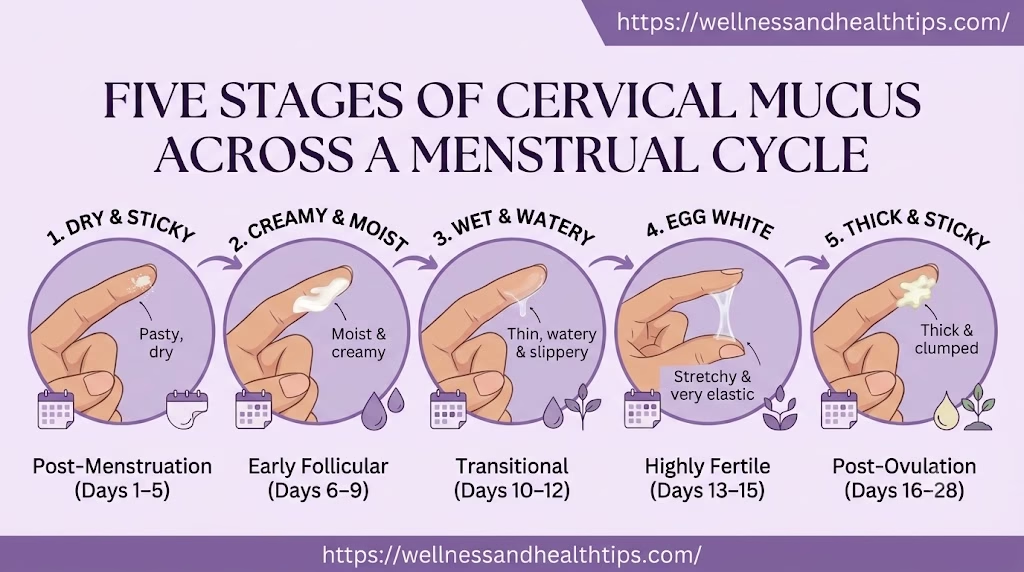
Every cycle is different, but most people notice the same five stages. Here is how cervical mucus changes during ovulation and the days around it. The day ranges below fit a 28-day cycle. Yours may shift earlier or later.
Stage 1: Dry Days
Right after your period ends, you may see little or no mucus. You may feel dry. Fertility is low at this point. This stage often falls around days 5 to 7.
Stage 2: Sticky Mucus
Next, you may notice small amounts of thick, tacky mucus. It looks white or pale yellow and feels sticky or crumbly. Sperm have a hard time moving through it. This stage often falls around days 8 to 9.
Stage 3: Creamy Mucus
As estrogen rises, mucus turns creamy. It feels like lotion and looks white or cloudy. Your fertility is starting to climb. This stage often falls around days 10 to 11.
Stage 4: Watery Mucus
Soon the mucus becomes thin and clear. You may feel wet or see a damp spot on your underwear. Your fertile window is now open. This stage often falls around days 12 to 13.
Stage 5: Egg White Mucus
This is the peak stage. The mucus looks clear, slippery, and stretchy, like raw egg white. You can often stretch it an inch or more between your fingers. This is your most fertile time, often around days 13 to 15.
What Happens After Ovulation
Once your ovary releases the egg, progesterone rises. Mucus quickly turns thick, sticky, or creamy again. Many people feel dry within a day or two.
Spotting Your Peak Day
Your peak day is the last day you notice wet, slippery, or stretchy mucus. Ovulation usually happens on or close to that day. You only know your peak day after it has passed. A few days of tracking make it easier to spot.
What About Early Pregnancy?
If the egg is fertilized, mucus stays thick and creamy. Some people notice more white discharge in early pregnancy. This is not a reliable sign, so take a pregnancy test to be sure.
Your Fertile Window
Sperm can live up to five days inside fertile mucus. An egg survives just 12 to 24 hours after release. So your fertile window lasts about six days. It includes the five days before ovulation, plus ovulation day.
Wet, slippery mucus tells you the window is open. Sex on these days gives sperm a ready path to the egg. You do not have to wait for the very last day.
Best Days to Try
- The first day you notice watery mucus.
- Every day of egg white mucus.
- Your peak day and the day after.
Most doctors suggest sex every one to two days during this time. This keeps fresh sperm waiting when the egg arrives. It also feels less stressful than timing one exact day.
How to Check Your Cervical Mucus
You do not need special tools. A few clean habits are enough.
Three Simple Methods
- Toilet paper: Before you urinate, wipe from front to back. Look at the mucus on the paper.
- Underwear: At the end of the day, look at your underwear or liner.
- Fingers: Wash your hands first. Gently wipe the vaginal opening and check your fingertip. Then press your finger and thumb together and pull them apart to test the stretch.
Many people find the finger method the most accurate. Choose the one that feels most comfortable to you.
What to Write Down
Each day, record three things:
- Feel: dry, damp, wet, or slippery.
- Look: clear, cloudy, white, or creamy.
- Stretch: none, short, or over an inch.
Use a notebook or a fertility app. Note the most fertile type you saw that day.
Tips for Better Results
- Check at the same times each day.
- Skip checks right after sex or when aroused. Semen and arousal fluid can confuse results.
- Track for at least three cycles. Over time, you will see your own pattern of cervical mucus changes during ovulation.
A Sample Week of Tracking
A real chart makes this easier to picture. Here is what a few days around ovulation might look like for one person.
- Day 11: Creamy and white. It feels like lotion. No stretch.
- Day 12: Thin, cloudy, and wet. It stretches a little.
- Day 13: Clear and slippery. It stretches about an inch.
- Day 14: Clear, stretchy, and plentiful. This is the peak.
- Day 15: Sticky and thick. You feel drier. The peak day has passed.
In this example, the best days to try would be days 12 through 15. Your own chart may look different. That is normal. What counts is the shift from dry to wet and back again.
Two Popular Mucus Tracking Methods
Some people want a clear system to follow. Two well-known options use mucus as the main sign.
The Billings Ovulation Method
This method focuses on how your vulva feels through the day. You note dryness, dampness, or slipperiness. You also track the look of the mucus. It is simple and needs no tools.
The Creighton Model
This method uses a set of codes to describe the mucus you see. A trained teacher guides you through it. It can feel more detailed, but many people like the structure.
Either option can help you learn your pattern. Ask a trained instructor if you want hands-on support.
Common Myths About Cervical Mucus
Mucus talk is full of half-truths. Let us clear up a few.
“More Discharge Means Better Fertility”
Not always. The type matters more than the amount. Thick, sticky mucus can block sperm, even if you have plenty of it.
“Dry Days Mean I Cannot Get Pregnant”
Sperm need fertile mucus to survive. Dry days make pregnancy unlikely, but cycles can shift. Stress or travel may move ovulation later or earlier than you expect.
“Egg White Mucus Guarantees Ovulation”
It is a strong sign, but not a promise. Conditions like PCOS can cause fertile-looking mucus without an egg release. Pair mucus checks with other signs for a fuller picture.
“Cervical Mucus Works as Birth Control”
No. Mucus tracking alone is not a reliable way to avoid pregnancy. If you want to prevent pregnancy, talk to your doctor about proven methods.
What Can Change Your Mucus
Not every change points to ovulation. Many things can alter your mucus pattern.
Common Causes
- Birth control: Hormonal methods often reduce or thicken mucus.
- Breastfeeding: Hormones can delay the return of fertile mucus.
- Medicines: Antihistamines and some fertility drugs can dry mucus.
- Hydration: Not drinking enough water may lower your mucus.
- Stress and illness: Both can shift your hormones and delay ovulation.
- Products: Lubricants, spermicides, and douching can disrupt mucus.
- Age: Mucus often decreases as you near perimenopause.
A Special Note on PCOS
Polycystic ovary syndrome (PCOS) can cause egg white mucus on many days without ovulation. Hormones may rise, but the egg is not released. If your cycles are irregular, mucus alone may mislead you. Talk to your doctor and consider other tracking methods too.
When Mucus Signals a Problem
Healthy mucus is usually clear, white, or pale yellow. It should not smell strong. See a doctor if you notice any of these:
- Yellow, green, or gray discharge
- A strong or fishy smell
- Itching, burning, or redness
- Thick, white, cottage cheese-like discharge
- Pelvic pain or bleeding between periods
These signs can point to an infection, such as a yeast infection, bacterial vaginosis, or an STI. Treatment is usually simple. Untreated infections can also affect fertility, so get checked early. Do not try to treat it on your own.
Easy Ways to Support Healthy Mucus
You cannot force your body to make more mucus. But small habits can help your body work at its best.
Daily Habits
- Drink water through the day.
- Eat balanced meals with fruit, vegetables, whole grains, and healthy fats.
- Get enough sleep and find ways to ease stress.
- Limit alcohol, keep caffeine moderate, and quit smoking.
- Skip douches and scented products.
Lubricants and Supplements
Many lubricants can slow sperm. If you need one, pick a fertility-friendly option. Some people try evening primrose oil or a cough syrup with guaifenesin. Research on these is limited. Always ask your doctor before trying them.
Pair Mucus Tracking With Other Signs
Mucus gives you early warning that ovulation is near. Other tools can confirm what your mucus tells you.
- Ovulation predictor kits: These test urine for a rise in LH. That rise comes about 24 to 36 hours before ovulation.
- Basal body temperature (BBT): Your temperature rises slightly after ovulation. It confirms the egg was released, but only after the fact.
- Cervix position: Around ovulation, the cervix sits higher, feels softer, and opens slightly.
- Ovulation pain: Some people feel a mild twinge on one side of the lower belly.
Using two or three signs together gives the clearest picture. Our female fertility guide walks through each method in more detail.
When to Talk to a Doctor
Many couples conceive within a year of trying. Consider seeing a doctor if any of these apply:
- You are under 35 and have tried for 12 months.
- You are 35 or older and have tried for 6 months.
- Your cycles are very irregular or missing.
- You never see fertile mucus across several cycles.
- You have pain, heavy bleeding, or a known condition like PCOS or endometriosis.
A doctor can check your hormones and ovulation. Getting help early is a smart step, not a sign of failure.
Final Thoughts
Your body sends clear signals if you know where to look. Paying attention to cervical mucus changes during ovulation is one of the easiest ways to find your fertile days. It is free, simple, and gentle.
Start with a few days of notes. Add more details as you gain confidence. Be patient with yourself, because tracking is a skill that grows with practice.
Ready for the next step? Head back to our female fertility guide for practical tips on nutrition, lifestyle, and more.
This article is for information only and does not replace medical advice.
FAQs
What does cervical mucus look like when you ovulate?
It looks clear, slippery, and stretchy, much like raw egg white. You can often stretch it an inch or more between your fingers.
How long does egg white mucus last?
Most people see it for about two to three days. Some see it for just one day, and others for up to five.
Can you get pregnant with no cervical mucus?
It is less likely. Sperm need fertile mucus to survive and travel. Some people have little visible mucus, so ask your doctor if this is your pattern.
Does ovulation happen right after peak mucus?
Usually, yes. Ovulation tends to happen on or close to your peak day, which is the last day of wet, stretchy mucus.
Can you ovulate without egg white mucus?
Yes. Some medicines, hormone issues, and low water intake can reduce mucus. Use other signs, like ovulation kits, to double-check.
When should I see a doctor about my mucus?
See a doctor for yellow or green mucus, a strong smell, itching, or pain. Also go if you never see fertile mucus across several cycles.