
Trying to get pregnant can feel like a guessing game. You hear about “fertile days,” “ovulation,” and “the best time to try.” But nobody explains it in plain words.
Here is the good news. Your body follows a pattern, and you can learn it. Once you know your fertile window, you can time sex with more confidence and less stress.
Many people ask, how many fertile days does a woman have in a month? The answer is shorter than you might think. This guide breaks it down step by step. It also fits into our bigger female fertility guide, where you can explore every part of conceiving in more depth.
Grab a cup of tea and let’s get into it.
The Short Answer: Your Fertile Window
So, how many fertile days does a woman have? About six days in each cycle. That’s it.
Those six days include the five days before ovulation and the day you ovulate. Doctors call this stretch your “fertile window.”
Outside this window, pregnancy is very unlikely. That’s because an egg only survives for a short time after it leaves the ovary.
Some people get a little more or a little less than six days. Your cycle length, stress levels, and health all play a part. But six is a solid average to remember.
Think of it like a small door that opens once a month. If you know when it opens, you can plan around it.
How Your Menstrual Cycle Works
Before we find your window, let’s look at the full cycle. It helps to see the big picture.
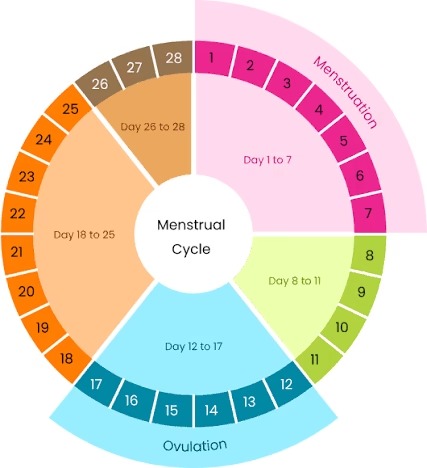
A cycle starts on the first day of your period. It ends the day before your next period begins. Most cycles last between 21 and 35 days. The “textbook” cycle is 28 days, but plenty of healthy women are different.
The Four Phases
Your cycle moves through four phases. Each one has a job.
- Menstrual phase: Your uterus sheds its lining. This is your period, and it usually lasts three to seven days.
- Follicular phase: Your brain tells your ovaries to grow eggs. One egg usually becomes the “lead” egg. Estrogen rises during this time.
- Ovulation: The lead egg leaves the ovary. This is the key moment for conception.
- Luteal phase: Your body prepares for a possible pregnancy. If no egg is fertilized, hormones drop and your period returns.
The follicular phase can change in length from month to month. The luteal phase stays steadier. It usually lasts 12 to 16 days.
That detail matters a lot. You’ll see why in the next few sections.
What Is Ovulation, Exactly?
Ovulation happens when a mature egg is released from an ovary. The egg then travels into the fallopian tube. This is where sperm and egg can meet.
The egg lives for only 12 to 24 hours. After that, it can no longer be fertilized. So the clock is short.
Ovulation is triggered by a surge in a hormone called luteinizing hormone, or LH. This surge usually comes 24 to 36 hours before the egg is released.
You can’t feel the surge, but you can test for it. We’ll cover that soon.
Many people think ovulation always falls on day 14. That’s only true if you have a perfect 28-day cycle. And most people don’t.
A better rule is this: ovulation usually happens about 12 to 16 days before your next period. So if your cycle is longer, ovulation comes later. If it’s shorter, ovulation comes sooner.
Why Is the Fertile Window Six Days Long?
Here’s a question that surprises many people. If the egg only lives one day, why do you get six fertile days?
The answer is sperm. Sperm can survive inside the female body for up to five days. They wait in the cervix and fallopian tubes. When the egg arrives, they’re ready.
So the math is simple:
- Sperm can live up to 5 days.
- The egg lives about 1 day.
- Together, that gives you a window of around 6 days.
This also explains why you don’t need to have sex on the exact day of ovulation. You can conceive from sex a few days earlier.
That takes some pressure off. You don’t have to hit a perfect target. You just need to be in the right zone.
Your Most Fertile Days
Not all six days are equal. Your chances build up as ovulation gets closer.
Research shows the odds look something like this:
- Five days before ovulation: around 10% chance
- Two days before ovulation: around 25% to 30% chance
- One day before ovulation: up to 30% or more
- Ovulation day: around 20% to 30% chance
- After ovulation: close to zero within a day
Your peak days are the two days before ovulation and ovulation day itself. If you only have energy for a few tries, aim for those.
Keep in mind that these numbers are averages. Your body is unique. Some months you may ovulate earlier. Other months, later.
Also, even with perfect timing, pregnancy isn’t guaranteed. For a healthy couple, the chance in one cycle is about 20% to 25%. Many couples need several months. That’s normal.
How to Find Your Fertile Window
Now for the fun part. How do you know when your window opens? You have several tools. You can use one or mix a few for better accuracy.
-
Track Your Cycle on a Calendar
Start by marking the first day of each period. Do this for three to six months. Then work out your average cycle length.
Next, subtract 14 from your average length. That gives a rough guess of your ovulation day. For a 30-day cycle, you’d guess day 16.
Your fertile window starts about five days before that guess. In this example, it opens around day 11.
This method is free and easy. But it’s only a guess. It works best if your cycles are regular.
-
Watch Your Cervical Mucus
Your cervical mucus changes through the month. It’s one of the best natural clues you have.
After your period, you may feel dry or notice sticky mucus. As ovulation nears, mucus becomes creamy, then wet. Right before ovulation, it turns clear and stretchy. Many people compare it to raw egg whites.
This “egg white” mucus helps sperm swim and survive. When you see it, you’re in your fertile window.
You can check by wiping with clean tissue or noticing how things feel during the day.
-
Take Your Basal Body Temperature
Your basal body temperature (BBT) is your temperature at rest. You take it first thing in the morning, before you get out of bed.
After ovulation, progesterone raises your temperature by a small amount. It usually goes up by about 0.3 to 0.5 degrees Celsius.
Here’s the catch. BBT tells you that ovulation already happened. It doesn’t predict it.
Still, it’s useful. After a few months, you’ll see a pattern. That pattern helps you guess when your window opens next time.
-
Use Ovulation Predictor Kits
Ovulation test strips check your urine for the LH surge. A positive test means ovulation is likely in the next 24 to 36 hours.
These kits are simple and easy to find. Start testing a few days before your expected window. Test at the same time each day.
When the test turns positive, have sex that day and the next. This puts sperm in place right when the egg arrives.
One note: women with PCOS can get confusing results. Their LH can stay high. If that’s you, talk with your doctor.
-
Notice Your Body’s Signals
Your body may also give small hints. Some people notice:
- A mild twinge or ache on one side of the lower belly
- A higher sex drive
- Breast tenderness
- Light spotting
- A stronger sense of smell
Not everyone feels these signs. And they’re not very exact. Treat them as bonus clues, not your main tool.
What If Your Cycles Are Irregular?
Irregular cycles make timing harder. You may have a cycle that’s 26 days one month and 38 the next. In that case, a calendar won’t help much.
Don’t panic. You can still find your window. You just need to rely on real-time signs instead of dates.
Here’s what works best:
- Use ovulation test strips often. You may need to test for more days each cycle.
- Track cervical mucus daily. It reacts to your hormones as they happen.
- Chart your BBT. Over time, it shows whether you’re ovulating at all.
Common causes of irregular cycles include PCOS, thyroid problems, high stress, and big weight changes. Breastfeeding and coming off birth control can also shift things.
If your cycles are very irregular, see a doctor. A simple blood test can show what’s going on. Many causes are treatable.
Read our detailed guide on How to Track Ovulation with PCOS.
Common Mistakes That Throw Off Your Timing
Even careful trackers slip up sometimes. Here are the mistakes we see most.
Relying Only on an App
Fertility apps are handy. But many just use averages from your past cycles. They can’t see your hormones. If you ovulate early or late, the app may be wrong.
Use your app as a helper, not a judge. Pair it with test strips or mucus checks.
Waiting Until Ovulation Day
Many couples wait for a positive test and then try. By then, you’ve already lost some of your best days. Start earlier in your window.
Assuming Every Cycle Is the Same
Stress, travel, illness, and poor sleep can delay ovulation. Your window may move even if your period has always been on time. Stay flexible.
Skipping Tracking Because It Feels Stressful
Tracking should help you, not wear you down. If it starts to feel like a chore, take a break. Your mental health matters too.
How to Time Sex During Your Fertile Window
So you’ve found your window. Now what?
The simple answer: have sex every one to two days during those six days. You don’t need to do it every hour. More isn’t always better.
Frequent sex keeps fresh sperm available. It also keeps things relaxed. Rigid schedules can make intimacy feel like homework.
Here are a few gentle tips:
- Start when you first see fertile mucus or get a rise on your test
- Include the two days before ovulation
- Keep going through the day after your positive test
- Stay connected as a couple, not just focused on the goal
Talk with your partner. Let them know why timing matters, and keep it light. A little humor goes a long way.
You don’t need special positions or tricks. Staying lying down for a few minutes is fine if you like. But there’s no strong proof it boosts your odds.
Lifestyle Habits That Support Your Fertility
Timing is only one piece. Your overall health also shapes your chances. Small habits add up.
Eat Well
Aim for a balanced plate with veggies, fruit, whole grains, lean protein, and healthy fats. Foods rich in folate, iron, and omega-3s are especially helpful.
Taking a daily folic acid supplement is also wise. Doctors often suggest starting before you conceive.
Move Your Body
Regular, moderate exercise helps balance hormones. A daily walk or a few yoga sessions is plenty. Very intense workouts can sometimes disrupt ovulation, so avoid overdoing it.
Manage Stress and Sleep
High stress can delay ovulation. Try simple tools like deep breathing, journaling, or time outdoors. Aim for seven to nine hours of sleep each night.
Skip Smoking and Limit Alcohol
Smoking harms egg quality and lowers fertility. Heavy drinking can also hurt your chances. Cutting back is one of the best things you can do.
For a deeper look at all these habits, check out our complete female fertility guide.
When to See a Doctor
Most healthy couples conceive within a year. But sometimes you need a little help. There’s no shame in asking.
Here’s a simple guide:
- Under 35: See a doctor after 12 months of trying.
- Age 35 to 39: See a doctor after 6 months of trying.
- Age 40 or older: Talk to a doctor right away or after 3 months.
You should also get help sooner if you have very painful periods, no periods at all, or known conditions like endometriosis or PCOS. A history of pelvic infections or miscarriages is another reason.
Fertility is a team effort. Your partner’s health matters just as much. A semen test is simple and gives helpful answers.
Remember, asking for help early often saves time. It doesn’t mean something is wrong.
Final Thoughts
Your fertile window is short, but it isn’t a mystery. It’s about six days, with the best chances in the two days before ovulation and on the day itself.
Start with small steps. Track your cycle, watch for body clues, and try ovulation strips if you want extra proof. Keep sex fun and regular during your window.
Be kind to yourself along the way. Getting pregnant can take time, even when everything is done right. Every cycle you track teaches you something new about your body.
Want to learn more? Visit our female fertility guide for tips on nutrition, hormones, and boosting your chances of conceiving.
This article is for general information only. It isn’t medical advice. Talk to a healthcare provider about your personal situation.
FAQs
How long is the fertile window each month?
It lasts about six days. That includes the five days before ovulation and the day of ovulation.
Which days are the most fertile?
The two days before ovulation and ovulation day itself. Your chances peak during this stretch.
How long does an egg live after ovulation?
An egg survives for only 12 to 24 hours. After that, it can’t be fertilized.
How long can sperm live inside the body?
Sperm can survive for up to five days. This is why sex before ovulation can lead to pregnancy.
Can I get pregnant outside my fertile window?
It’s very unlikely. But early or late ovulation can shift your window, so your timing may differ from what you expect.
How do I know I’m ovulating?
Look for egg-white cervical mucus, a positive ovulation test, or a mild pelvic twinge. A small rise in basal body temperature confirms it afterward.