
If you’re trying to get pregnant, you’ve probably heard one word again and again: ovulation. Everyone talks about it. Few people explain it clearly.
Here’s the good news. Ovulation isn’t as mysterious as it sounds. Once you understand it, timing sex and tracking your cycle gets much easier.
In this post, we’ll break down what ovulation is and why it matters. We’ll also walk through what happens during ovulation step by step. You’ll learn the signs to watch for and simple ways to track it.
This article is part of our bigger female fertility guide to boost your chances of conceiving. Think of this post as a close-up on one key piece of the puzzle.
What Is Ovulation?
Ovulation is the moment your ovary releases a mature egg. That’s it. One egg, once a cycle, ready to meet a sperm.
Your ovaries hold thousands of tiny eggs. Each egg sits inside a small, fluid-filled sac called a follicle. Every month, a group of follicles starts to grow. Usually, only one wins the race and releases its egg.
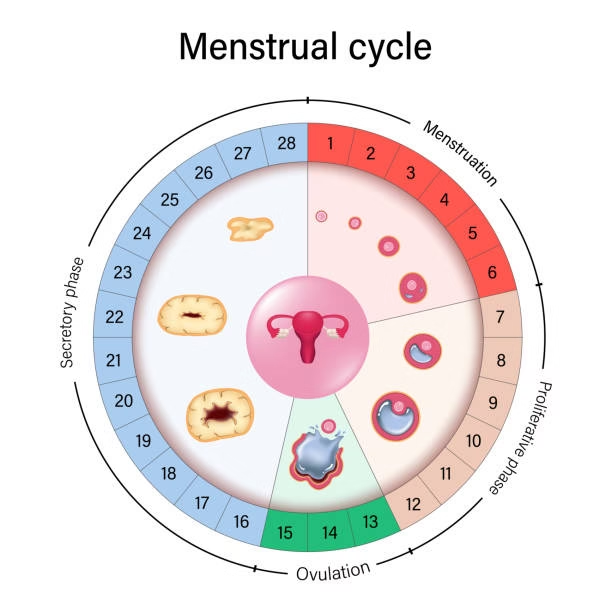
Ovulation is the middle chapter of your menstrual cycle. Your cycle starts on the first day of your period. It ends the day before your next period begins.
Your cycle has two main halves:
- The follicular phase: This runs from day one of your period until ovulation.
- The luteal phase: This runs from ovulation until your next period starts.
The luteal phase stays fairly steady. It usually lasts 12 to 14 days. The follicular phase changes much more from person to person. That’s why ovulation doesn’t land on the same day for everyone.
Why Does Ovulation Matter for Conception?
You can only get pregnant when an egg is available. No egg, no pregnancy. It’s that simple.
The egg survives for about 12 to 24 hours after release. That’s a very short window. Sperm, on the other hand, can live inside your body for up to five days.
This means your fertile window lasts about six days. It includes the five days before ovulation and ovulation day itself. Sex during this window gives you the best odds of conceiving.
Timing Beats Frequency
Many couples try to have sex every single day. That works, but it can feel exhausting. Focusing on your fertile window takes off some of the pressure.
You don’t need to plan every night. You just need to plan the right few days. Research suggests your chances peak in the two days before ovulation and on ovulation day.
Ovulation Is a Health Signal Too
Regular ovulation also tells you your hormones are working well. Skipped or irregular ovulation can point to issues like polycystic ovary syndrome (PCOS) or thyroid problems.
So tracking ovulation does more than help you conceive. It also helps you spot possible health concerns early.
Ovulation Step by Step, Part One: Getting Ready
Now for the main event. Here is what happens during ovulation step by step. Your body runs a well-planned routine every month. We’ll start with the build-up.
Step 1: Your Brain Sends the First Signal
Everything starts in your brain. At the beginning of your cycle, your hypothalamus releases a hormone called GnRH. This tells your pituitary gland to release follicle-stimulating hormone, or FSH.
FSH is the “wake-up call” for your ovaries. It tells them to get several follicles ready for action.
Step 2: Follicles Start to Grow
Under FSH’s guidance, a group of follicles begins to grow. Each one holds an immature egg. As they grow, the follicles start making estrogen.
At this stage, you’re usually still on your period or just finishing it. Most people don’t feel anything happening. But your ovaries are hard at work.
Step 3: One Dominant Follicle Takes the Lead
Soon, one follicle pulls ahead. This is the dominant follicle. It keeps growing while the others fade away.
Your estrogen levels climb during this time. Estrogen does several jobs:
- It thickens the lining of your uterus to prepare for a possible pregnancy.
- It makes your cervical mucus clearer, wetter, and stretchier.
- It gives you a natural boost in energy and mood for many people.
Step 4: The LH Surge Arrives
When estrogen reaches a high enough level, your brain responds. Your pituitary gland releases a big burst of luteinizing hormone, or LH. This is called the LH surge.
The surge usually happens 24 to 36 hours before the egg is released. It’s the exact signal that ovulation tests pick up. It’s also your body’s final “get ready” message.
Ovulation Step by Step, Part Two: Release and Aftermath
Once the LH surge hits, things move fast. The next steps happen over about a day or two.
Step 5: The Follicle Releases the Egg
This is ovulation itself. The dominant follicle breaks open, and the mature egg bursts out. It usually happens within one to two days after the LH surge begins.
Some people feel a small twinge or ache on one side of the lower belly. Others feel nothing at all. Both are completely normal.
Step 6: The Egg Travels Into the Fallopian Tube
After release, the egg doesn’t just float around. Soft, finger-like ends of the fallopian tube, called fimbriae, sweep it inside. The egg then starts to move slowly toward the uterus.
This is where the magic happens. If sperm are waiting in the tube, one may fertilize the egg. Fertilization usually happens in the outer part of the fallopian tube.
The egg only stays fertile for about 12 to 24 hours. After that, it can no longer be fertilized.
Step 7: The Empty Follicle Becomes the Corpus Luteum
The follicle doesn’t disappear after releasing its egg. It turns into a tiny hormone factory called the corpus luteum. This structure makes progesterone.
Progesterone keeps your uterine lining thick and ready for a fertilized egg. If you become pregnant, the corpus luteum keeps working. If you don’t, it breaks down. Progesterone drops, and your period arrives about two weeks after ovulation.
How to Spot the Signs of Ovulation
Your body often drops hints that ovulation is near. Not everyone notices all of them. Still, learning your own patterns can help a lot.
Here are the most common signs:
- Cervical mucus changes: Your mucus becomes clear, slippery, and stretchy. Many people compare it to raw egg whites. This is your most fertile mucus.
- A rise in basal body temperature: Your resting temperature goes up slightly after ovulation. The rise is small, usually about 0.3 to 0.5 degrees Celsius.
- Mild pelvic pain: Some people feel a one-sided twinge or cramp. Doctors call this mittelschmerz, which means “middle pain.”
- Breast tenderness: Rising hormones can make your breasts feel sore or full.
- A higher sex drive: Many people feel more interested in sex around ovulation.
- Light spotting: A small amount of pink or brown spotting can happen mid-cycle.
- A heightened sense of smell or taste: Some people notice this, though it’s less common.
One important point. Temperature only rises after ovulation has already happened. So it confirms ovulation but doesn’t predict it. For timing sex, use it alongside other signs.
Simple Ways to Track Your Ovulation
You don’t need fancy gear to track ovulation. Start with one or two methods, then add more if you like.
- Track your cycle on a calendar or app. Mark the first day of every period. After a few months, you’ll see your average cycle length. Ovulation usually happens about 12 to 14 days before your next period.
- Use ovulation predictor kits (OPKs). These urine strips detect the LH surge. A positive test means ovulation will likely happen within 24 to 48 hours.
- Check your cervical mucus daily. Look for the clear, stretchy texture. When you see it, you’re in your fertile window.
- Chart your basal body temperature. Take your temperature every morning before you get out of bed. Use the same thermometer each time.
- Try a fertility tracker or wearable. Some devices track skin temperature or hormones for you. They can save time, though they cost more.
A Quick Tip for Beginners
Don’t rely on the “day 14” rule. That only works for a perfect 28-day cycle. Many people have shorter or longer cycles. Your ovulation day may fall earlier or later.
Combining methods gives you the clearest picture. For example, pair an OPK with cervical mucus checks.
Deeper dive: Menstrual Cycle Phases and Fertility Explained Simply
When Ovulation Doesn’t Go as Planned
Sometimes ovulation is late, irregular, or missing altogether. Doctors call missing ovulation anovulation. It’s one of the more common causes of fertility struggles.
Several things can disrupt ovulation:
- PCOS: This hormone condition can stop follicles from maturing properly.
- Thyroid problems: Both an overactive and underactive thyroid can throw off your cycle.
- High stress: Long-term stress can delay or block the LH surge.
- Very low or very high body weight: Both extremes can affect hormone levels.
- Intense exercise: Overtraining without enough fuel can pause ovulation.
- Perimenopause: Ovulation becomes less predictable as you approach menopause.
Signs of an ovulation problem include very irregular periods, no periods, or extremely long cycles. Cycles shorter than 21 days or longer than 35 days are also worth a mention to your doctor.
When to See a Doctor
Don’t wait too long if something feels off. Here’s a general guide:
- Under 35 and trying for 12 months without success: talk to your doctor.
- 35 or older and trying for six months: book a visit.
- Over 40, or you know you have irregular periods: see a doctor sooner.
Many ovulation issues are very treatable. Getting answers early can save you months of worry.
Everyday Habits That Support Healthy Ovulation
You can’t control every part of ovulation. But small daily habits can help your body do its job.
- Eat a balanced diet. Focus on whole foods, healthy fats, lean protein, and plenty of vegetables. Add folate-rich foods like leafy greens and lentils.
- Take folic acid. Many doctors recommend it before you conceive. Ask your provider about the right dose for you.
- Move your body regularly. Moderate exercise supports hormone balance. Skip extreme workouts that leave you exhausted.
- Sleep well. Aim for seven to nine hours. Poor sleep can affect your reproductive hormones.
- Manage stress. Try walking, deep breathing, journaling, or yoga. Pick whatever helps you feel calm.
- Limit alcohol and skip smoking. Both can harm egg quality and fertility.
- Keep a healthy weight. Small changes often help, especially if you have PCOS.
For more ideas on supporting your fertility overall, check out our full female fertility guide.
Common Ovulation Myths
Let’s clear up a few myths that cause a lot of confusion.
- Myth: Everyone ovulates on day 14. Truth: Ovulation timing varies. It depends on your own cycle length.
- Myth: You can only get pregnant on ovulation day. Truth: Sperm can live for up to five days, so the days before ovulation count too.
- Myth: You always ovulate every cycle. Truth: Even healthy people sometimes skip ovulation. Stress, illness, and travel can all play a part.
- Myth: You can’t get pregnant after your period. Truth: With a short cycle, you can ovulate soon after your period ends.
- Myth: You must feel ovulation. Truth: Many people feel nothing at all, and that’s normal.
Final Thoughts
Ovulation is the key moment in your cycle when conception becomes possible. Your brain, ovaries, and hormones work together to release a single egg. That egg then has a short window to meet a sperm.
Now you know what happens during ovulation step by step. You also know how to spot the signs and how to track your fertile days. That knowledge puts you in a much stronger position.
Be patient with yourself. Even when everything works perfectly, conception can take a few months. Track gently, take care of your health, and ask for help when you need it.
Want to learn more? Head back to our complete guide to female fertility for more tips on boosting your chances of conceiving.
This article is for general information only. It doesn’t replace advice from your doctor or healthcare provider.
FAQs
-
How long does ovulation last?
The release of the egg itself is quick. The egg can be fertilized for only about 12 to 24 hours afterward.
-
When do you ovulate in a 28-day cycle?
Most people ovulate around day 14. Still, it can vary by a few days, so tracking your own signs helps.
-
Can you get pregnant right after your period?
Yes, it’s possible, especially with a short cycle. Sperm can live for up to five days and may still be around when you ovulate.
-
Can you ovulate without having a period?
Yes. Ovulation happens before your period, so you can ovulate even if your periods are very light or irregular.
-
Does ovulation hurt?
Some people feel a mild, one-sided twinge. Many feel nothing at all. Severe or lasting pain is worth checking with a doctor.
-
How do I know if I’ve ovulated?
A positive ovulation test followed by a rise in basal body temperature is a good sign. Changes in cervical mucus also help.
-
Can stress stop ovulation?
Yes. Long-term stress can delay or block ovulation. Rest and stress relief can help your cycle return to normal.
-
How soon after ovulation can I take a pregnancy test?
Wait about 12 to 14 days after ovulation. Testing earlier can give a false negative.