Ever notice how some weeks you feel unstoppable, and others you just want a blanket and a snack? Your hormones are behind those swings. They also decide the days when you can get pregnant.
Whether you want to conceive, avoid pregnancy, or simply understand your body, this guide helps. It gets menstrual cycle phases and fertility explained in plain words, with no medical jargon. Grab a cup of tea and let’s get started.
What Is the Menstrual Cycle?
The menstrual cycle is the monthly series of changes your body goes through to prepare for a possible pregnancy. It starts on the first day of your period. It ends the day before your next period begins.
Many people think a cycle lasts 28 days. That’s just the average. Anywhere from 21 to 35 days is common for adults. Your own length may shift a little from month to month, and that’s normal.
Four hormones run the show:
- Estrogen: builds up the uterine lining and helps an egg mature.
- Progesterone: keeps the lining thick and ready for a fertilized egg.
- Follicle-stimulating hormone (FSH): wakes up the follicles in your ovaries.
- Luteinizing hormone (LH): triggers the release of an egg.
Think of these hormones as a team passing a baton. When one rises, another falls, and the cycle moves forward. Once you understand this rhythm, your fertility starts to make a lot more sense.
The Four Phases of Your Cycle
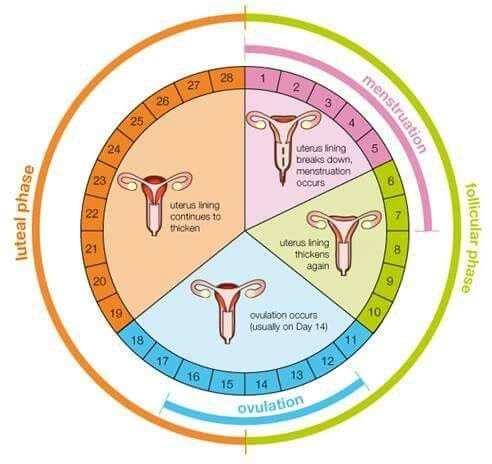
Each cycle has four phases. Here are the menstrual cycle phases and fertility explained step by step.
Phase 1: The Menstrual Phase (Days 1–5)
This phase starts on day one of your period. Your uterus sheds its lining because pregnancy didn’t happen. That’s the bleeding you see.
Periods usually last three to seven days. Hormone levels sit at their lowest now, so you may feel tired. Cramps, headaches, and back pain are common too.
Can you get pregnant during your period? It’s unlikely, but it’s not impossible. Sperm can live up to five days inside the body. If your cycle is short, you might ovulate soon after your period ends. That overlap can lead to pregnancy.
A few small habits can make this phase easier. Rest when you can and drink plenty of water. Try gentle movement, like a short walk. A heating pad can also ease cramps.
Phase 2: The Follicular Phase (Days 1–13)
This phase overlaps with your period. It starts on day one and lasts until ovulation. FSH rises and tells your ovaries to grow several follicles. Each follicle holds an immature egg.
Usually, one follicle becomes the dominant one. The others fade away. As that follicle grows, it releases more estrogen. Estrogen rebuilds the uterine lining after your period.
Many people feel a boost during this time. Energy rises, mood lifts, and skin often looks clearer. That’s estrogen at work.
For fertility, this phase decides how ready your egg will be. It’s also the part of your cycle that varies the most in length. That’s why one person has a 24-day cycle and another has a 34-day cycle. Stress, illness, and travel can stretch this phase out.
Phase 3: Ovulation (Around Day 14)
Ovulation is the star of the show. A surge of LH makes the dominant follicle burst open. It releases a mature egg into the fallopian tube.
This usually happens about 12 to 16 days before your next period. It doesn’t always fall on day 14. If your cycle is 35 days long, ovulation will come later.
The egg lives only 12 to 24 hours after release. That’s a tiny window. Still, sperm can survive for up to five days. So you can get pregnant from sex that happens before ovulation.
Here are signs that ovulation is close:
- Clear, stretchy cervical mucus, like raw egg white
- A mild twinge on one side of your lower belly
- A higher sex drive
- Slight breast tenderness
Phase 4: The Luteal Phase (Days 15–28)
After ovulation, the empty follicle turns into a structure called the corpus luteum. It makes progesterone. This hormone thickens the uterine lining so it’s ready for a fertilized egg.
If the egg is fertilized, it travels to the uterus. It usually implants about six to ten days after ovulation. Your body then makes the pregnancy hormone hCG. That’s what a pregnancy test picks up.
If there’s no fertilization, the corpus luteum breaks down. Progesterone and estrogen drop. Your lining sheds, and a new cycle begins.
The luteal phase usually lasts 12 to 14 days. It tends to stay steady from cycle to cycle. Many people notice PMS symptoms now, such as bloating, mood swings, cravings, and sore breasts. Progesterone causes most of them.
If your luteal phase is shorter than ten days, the lining may not have enough time to support an embryo. A doctor can check this for you.
How Each Phase Affects Your Mood and Body
Your hormones don’t just control fertility. They also shape how you feel day to day. Knowing this can save you a lot of self-blame.
During your period, energy is low. Your body is working hard, so go easy on yourself. In the follicular phase, estrogen climbs and you may feel more social, creative, and focused.
Around ovulation, many people feel their best. Confidence and energy often peak. Some also notice a stronger sex drive.
In the luteal phase, progesterone takes over. You may feel calmer at first, then more tired or moody as your period nears. Sleep can get lighter too.
You don’t have to plan your life around your cycle. But small tweaks help. Save big presentations for your high-energy days if you can. Plan rest, comfort food, and early nights for the days before your period.
Your Fertile Window Explained
Your fertile window is the stretch of days when pregnancy is possible. It lasts about six days. It includes the five days before ovulation and the day of ovulation itself.
Why six days? Sperm can survive up to five days, and the egg lives about one day. Chances are highest on the two days before ovulation and on ovulation day.
Here’s the catch. Ovulation rarely happens on the exact same day each month. So counting days on a calendar is only a guess. Tracking real body signs gives you a much better picture.
If you’re trying to conceive, aim to have sex every one to two days during this window. You don’t need to be perfect. Regular sex in these days gives you a good chance.
If you want to avoid pregnancy, remember that the calendar method alone isn’t reliable. Pair it with a proven method, such as condoms. Or talk to a doctor about other options.
How to Track Your Cycle and Ovulation
You don’t need fancy gadgets. Start simple and add tools as you go. Here are the most popular methods.
- Calendar tracking. Mark the first day of every period. After three months, you’ll see your average cycle length.
- Basal body temperature (BBT). Take your temperature every morning before you get out of bed. It rises by about 0.3 to 0.6°C after ovulation. This confirms ovulation happened, but it doesn’t predict it.
- Cervical mucus checks. Notice the texture each day. Egg-white mucus signals peak fertility.
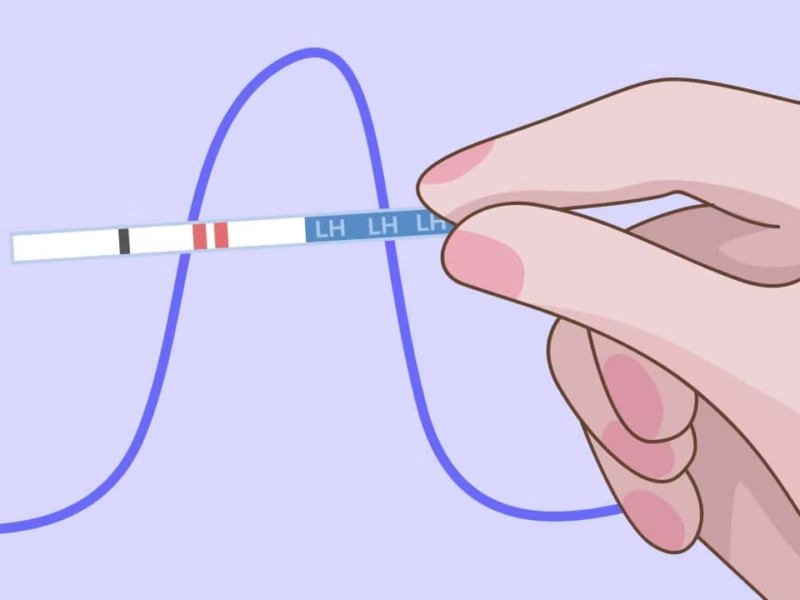
- Ovulation predictor kits (OPKs). These urine strips detect the LH surge. Ovulation usually follows within 24 to 36 hours.
- Fertility apps. Apps pull your data together and estimate your window. Treat their predictions as a guide, not a promise.
For best results, combine two or three methods. For example, use OPKs along with cervical mucus checks. Track for at least three cycles to see a clear pattern.
What Your Cycle Length Tells You
Your cycle length is a handy clue about your health. A steady cycle often means your hormones are working well. A cycle that jumps around by more than seven or eight days can hint at irregular ovulation.
Short cycles may mean you ovulate early. Long cycles may mean ovulation comes late, or sometimes not at all. Neither is a problem on its own. But a clear pattern over several months is worth sharing with your doctor.
Keep a simple note each month. Write down your start date, how heavy the flow was, and any pain or mood changes. These details help a doctor spot patterns fast.
What Can Change Your Cycle
Your cycle isn’t set in stone. Many everyday things can nudge it off track.
Lifestyle Factors
Stress is a big one. High stress raises cortisol, which can delay or even stop ovulation. Poor sleep, intense exercise, and sudden weight changes can do the same. Being very underweight or overweight can also affect your hormones.
Travel, night shifts, and illness can shift your timing too. Usually, your cycle returns to normal once life settles down.
Medical Conditions
Some health conditions affect cycles and fertility:
- Polycystic ovary syndrome (PCOS): causes irregular or missed ovulation.
- Thyroid disorders: an overactive or underactive thyroid can change your cycle length.
- Endometriosis: tissue grows outside the uterus and can cause pain and fertility trouble.
- Primary ovarian insufficiency: the ovaries slow down before age 40.
These conditions are common and treatable. Early diagnosis makes a big difference.
Age and Life Stages
Fertility is highest in your 20s. It starts to dip in the early 30s and drops faster after 35. In the years before menopause, called perimenopause, cycles often get shorter or more irregular.
Hormonal birth control also changes your natural pattern. It can take a few months to settle after you stop.
When to Talk to a Doctor
Some changes are normal. Others deserve a check-up. See a healthcare provider if:
Your periods stop for three months or more, and you’re not pregnant
- Your cycles are shorter than 21 days or longer than 35 days most of the time
- Bleeding is very heavy, and you soak a pad or tampon every hour or two
- Pain is severe and stops you from doing daily tasks
- You’re under 35 and haven’t conceived after 12 months of trying
- You’re 35 or older and haven’t conceived after six months
Don’t wait if something feels wrong. You know your body best. A simple blood test or ultrasound can often give answers quickly.
Simple Ways to Support Your Fertility
You can’t control everything, but small habits help.
Eat balanced meals with plenty of vegetables, whole grains, healthy fats, and protein. Iron-rich foods replace what you lose during periods. Folate matters too, especially if you plan to get pregnant. Many doctors recommend a folic acid supplement before conception.
Move your body regularly, but don’t overdo it. Moderate exercise like walking, yoga, or cycling supports hormone balance. Aim for seven to nine hours of sleep each night. Manage stress with whatever works for you, such as journaling, music, or time outdoors.
Limit alcohol and skip smoking. Both can harm egg quality and hormone levels. Keep up with regular health checks, including thyroid tests when your doctor advises them.
Common Myths About Cycles and Fertility
Let’s clear up a few popular myths.
- Myth: Everyone ovulates on day 14. Truth: Timing depends on your cycle length and changes from month to month.
- Myth: You can’t get pregnant on your period. Truth: It’s rare, but it can happen, especially with shorter cycles.
- Myth: A regular period means you ovulate. Truth: Not always. You can bleed without releasing an egg.
- Myth: Irregular cycles mean you can’t conceive. Truth: Many people with irregular cycles get pregnant, sometimes with extra support.
To know more on Fertility, please read our complete guide Female Fertility Guide: Boost Your Chances of Conceiving.
Final Thoughts
Your cycle is more than a monthly period. It’s a reliable sign of how your body is doing. Now that you have menstrual cycle phases and fertility explained, you can track your pattern with confidence.
Start with one simple method this month. Mark your period dates and notice how you feel each week. After a few cycles, you’ll spot your own rhythm. If something seems off, talk to a doctor. You deserve clear answers.
Disclaimer: This article is for general education only. It isn’t medical advice. Please talk to a qualified healthcare provider about your own health.
FAQs
How many phases are there in the menstrual cycle?
There are four: menstrual, follicular, ovulation, and luteal. Each one has its own hormone pattern and symptoms.
When am I most fertile during my cycle?
You’re most fertile in the two days before ovulation and on ovulation day. The whole fertile window lasts about six days.
Can I get pregnant right after my period ends?
Yes, it’s possible. Sperm can live up to five days, so early ovulation can overlap with the end of your period. This is more likely with short cycles.
How long is a normal menstrual cycle?
Most adults have cycles between 21 and 35 days. A little variation from month to month is normal.
What is the best way to track ovulation?
Combining methods works best. Try cervical mucus checks, ovulation predictor kits, and basal body temperature together for the clearest picture.
Does stress affect ovulation?
Yes. High stress can delay or even stop ovulation, which makes your cycle longer or irregular.
When should I see a doctor about my cycle?
See a doctor if your periods stop for three months, your cycles are very irregular, or your pain is severe. Also seek help if you haven’t conceived after 12 months of trying, or six months if you’re 35 or older.