Categories
PCOS

How to Track Ovulation With PCOS

If you have PCOS, tracking ovulation can feel like solving a puzzle with missing pieces. Your cycles may be irregular. Your hormones don’t always follow the “textbook” pattern. And popular tracking apps often assume a 28-day cycle that just doesn’t apply to you.

Here’s the good news: ovulation tracking with PCOS is still possible. It just takes a slightly different approach, and often, a combination of methods rather than just one.

A quick note before we start: PCOS is now officially called PMOS, or Polyendocrine Metabolic Ovarian Syndrome. A global panel of experts renamed the condition to better reflect its hormonal and metabolic nature, not just its effect on the ovaries. You’ll still see “PCOS” used everywhere, including in this article, since the term is familiar and still widely used in daily life and medical records.

Why Ovulation Tracking Is Harder With PCOS

PCOS disrupts the normal hormonal signals that trigger ovulation. This makes predicting your fertile window more complicated than it is for someone with regular 28-day cycles.

Here’s what typically gets in the way:

  • Irregular or absent periods make it hard to know when to even start tracking.
  • Elevated LH (luteinizing hormone) can stay high throughout the cycle, not just before ovulation.
  • Multiple false surges may show up on ovulation predictor kits.
  • Anovulatory cycles (cycles without ovulation) happen more often.

This doesn’t mean tracking is pointless. It means you need tools that look at more than one signal at a time.

Method 1: Basal Body Temperature (BBT) Charting

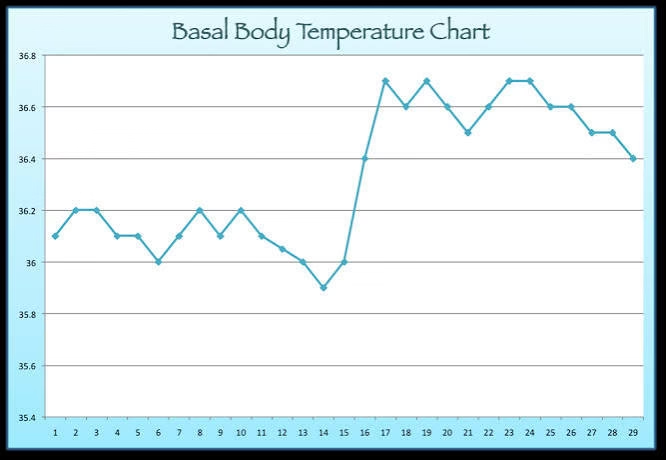
Basal body temperature is your body’s temperature at complete rest, first thing in the morning. It rises slightly after ovulation due to a jump in progesterone.

How to Do It

  1. Take your temperature every morning before getting out of bed.
  2. Use a basal thermometer for accurate, small changes.
  3. Record it at the same time each day, ideally within a 30-minute window.
  4. Plot it on a chart or app to see the pattern over time.

A sustained rise of about 0.5 to 1 degree Fahrenheit that lasts several days usually confirms ovulation already happened.

Why It Helps With PCOS

BBT charting doesn’t rely on LH levels, so it avoids the false-positive problem common with ovulation predictor kits. It confirms ovulation after the fact, which is still valuable for understanding your pattern over several months.

The downside is that BBT tells you ovulation happened, not that it’s about to happen. It works best combined with another method for real-time prediction.

Method 2: Cervical Mucus Monitoring

Your cervical mucus changes throughout your cycle in response to estrogen. Tracking these changes can help you spot your fertile window as it approaches, not just after it’s gone.

What to Look For

  • Dry or minimal mucus right after your period ends.
  • Sticky or tacky mucus as estrogen starts rising.
  • Creamy, white mucus in the days building up to ovulation.
  • Clear, stretchy, egg-white-like mucus near peak fertility.

This egg-white stage is your body’s most fertile sign. It usually appears one to two days before ovulation.

Tips for Women With PCOS

Women with PCOS sometimes experience mucus patterns that are less predictable or that show fertile-quality mucus without ovulation actually occurring. Because of this, cervical mucus is best used alongside BBT charting or ultrasound monitoring, not alone.

Method 3: Ovulation Predictor Kits (With Caution)

Standard ovulation predictor kits (OPKs) detect a surge in LH, which normally happens 24 to 36 hours before ovulation. The problem for PCOS is that baseline LH levels are often already elevated, which can trigger repeated false positives.

How to Use OPKs More Accurately With PCOS

  1. Test at the same time every day, ideally in the afternoon or evening.
  2. Track your results over a few months to identify your personal baseline.
  3. Look for a clear spike above your usual baseline, not just any positive line.
  4. Combine results with BBT or mucus tracking to confirm a real surge.
  5. Consider digital OPKs, which sometimes read subtle changes more clearly than test strips.

If you consistently get positive results for many days in a row, this may reflect a persistently elevated LH level rather than an actual ovulation surge. This is common in PCOS and worth mentioning to your doctor.

Method 4: Ultrasound Monitoring

For a more precise picture, some doctors use transvaginal ultrasounds to track follicle growth directly. This is often used when trying to conceive, especially alongside fertility medications like letrozole or clomiphene.

Ultrasounds can show:

  • The size and number of developing follicles.
  • Whether a dominant follicle is maturing.
  • Signs that ovulation has occurred, based on follicle collapse.

This method is more accurate than at-home tools, but it requires clinic visits and is usually reserved for active fertility treatment cycles rather than everyday tracking.

Method 5: Blood Progesterone Testing

A blood test measuring progesterone levels, usually done about a week after suspected ovulation, can confirm whether ovulation actually happened. Progesterone rises significantly after an egg is released.

This test is typically ordered by a doctor, often alongside other fertility monitoring. It’s especially useful if your cycles are irregular enough that timing home tests feels like guesswork.

Combining Methods for Better Accuracy

No single method is perfect for PCOS on its own. Combining two or three approaches gives a clearer, more reliable picture.

A practical combination many women use:

  • BBT charting every morning to confirm ovulation after it happens.
  • Cervical mucus tracking to catch the approaching fertile window.
  • OPKs, interpreted carefully, as a secondary confirmation signal.

Over a few months, this combination helps you understand your personal pattern, even if your cycles vary in length.

Tracking Cycle Length, Even When Irregular

Even without a predictable ovulation date, tracking cycle length still gives useful information. Note the first day of each period, and count the days until the next one starts.

Over several months, you may notice:

  • A range your cycles tend to fall within, even if inconsistent.
  • Seasonal or lifestyle patterns affecting cycle length.
  • Whether cycles are shortening or lengthening over time.

This data is genuinely useful to bring to a doctor’s appointment. It helps them understand your baseline before recommending next steps.

Lifestyle Factors That Affect Your Tracking Signals

Your daily habits can shift your ovulation signals, sometimes in confusing ways. Knowing this helps you read your data more accurately.

Sleep and Stress

Poor sleep and high stress raise cortisol levels. This can delay ovulation or throw off your BBT readings entirely. A late night out or a stressful week can show up as a temperature blip that has nothing to do with your cycle.

Illness and Alcohol

A cold, fever, or even a late-night glass of wine can raise your basal body temperature the next morning. Note these events on your chart so you don’t mistake them for ovulation.

Travel and Time Zone Changes

Traveling across time zones can shift when you take your temperature, which affects accuracy. Try to keep your testing time as consistent as possible, even while traveling.

Weight Changes

Both significant weight loss and weight gain can affect hormone levels and, in turn, ovulation patterns. This is particularly relevant for insulin-resistant PCOS, where even modest weight changes can shift cycle regularity.

Medications and Supplements

Metformin, inositol, and hormonal birth control can all influence your cycle and your tracking signals. If you start or stop a medication, expect a few months of adjustment before your patterns stabilize again.

Keeping a simple log alongside your tracking data, noting sleep, stress, illness, or medication changes, makes it much easier to separate real ovulation signals from noise.

When Tracking Alone Isn’t Enough

If you’ve been tracking for several months and still can’t pinpoint ovulation, or you’re not seeing consistent signs of ovulation at all, it’s worth talking to a doctor or fertility specialist.

This is especially important if:

  • You’re trying to conceive and haven’t had success after several months.
  • Your periods are absent or extremely irregular.
  • You suspect anovulatory cycles are happening regularly.
  • You want to explore medication options like letrozole to support ovulation.

Doctors can combine bloodwork, ultrasounds, and your tracking history to build a much clearer picture than any app or kit alone.

A Few Realistic Expectations

Tracking ovulation with PCOS takes patience. Some months your signs may be clear. Other months, they may be confusing or absent altogether. This is common, and it doesn’t mean something is wrong with your effort.

Give yourself several cycles before expecting a clear pattern to emerge. Small inconsistencies are normal, not a sign of failure.

Final Thoughts

Tracking ovulation with PCOS (now also known as PMOS) is rarely a one-tool job. BBT charting, cervical mucus tracking, careful OPK use, and occasional medical testing all add pieces to the puzzle. Used together, and given a few months of consistent effort, they can give you a genuinely useful picture of your cycle, even when it doesn’t follow a textbook pattern.

If you’re actively trying to conceive, pairing your own tracking with support from a doctor gives you the most complete and reliable path forward.

This content is for informational purposes only and does not constitute medical advice. Always consult a qualified healthcare provider for diagnosis and treatment.


FAQs

Can you track ovulation with PCOS using regular apps?

Standard cycle apps often assume a 28-day cycle, which doesn’t fit most PCOS patterns. They can still help with logging symptoms, but they shouldn’t be your only tracking tool.

Why do ovulation predictor kits give false positives with PCOS?

PCOS often causes chronically elevated LH levels, not just a short pre-ovulation surge. This can trigger repeated positive results that don’t reflect actual ovulation.

What is the most reliable way to confirm ovulation with PCOS?

A blood progesterone test, done about a week after suspected ovulation, is one of the most reliable confirmations. BBT charting is a helpful at-home alternative.

How long should I track before expecting a clear pattern?

Most women need at least 2 to 3 months of consistent tracking before a pattern starts to emerge, especially with irregular PCOS cycles.

Is PMOS the same condition as PCOS?

Yes. PMOS, or Polyendocrine Metabolic Ovarian Syndrome, is the new name for PCOS following a global expert consensus. The diagnosis and condition itself have not changed.

Categories
PCOS

Can You Get Pregnant With PCOS? Your Chances Explained

If you have PCOS, you probably worry about getting pregnant. It’s one of the most common questions doctors hear. The good news? Pregnancy is very possible with PCOS. This guide walks you through your real chances, what affects them, and how to boost your odds naturally.

A Quick Update: PCOS Has a New Name

Before we dive in, here’s something important. PCOS is now officially called PMOS, or Polyendocrine Metabolic Ovarian Syndrome. Global health experts made this change in 2026 after a decade-long review process published in The Lancet.

Why the change? The old name focused too much on ovarian cysts. But many women with this condition don’t even have cysts. The new name better reflects what’s really happening. It’s a hormonal and metabolic condition, not just an ovarian one.

This article uses PCOS and PMOS interchangeably, since PCOS is still the more familiar term. Both refer to the same condition.

Understanding PCOS and Fertility

PCOS affects how your ovaries work. It often causes irregular or missed periods. This happens because ovulation doesn’t occur regularly, or at all some months.

Ovulation is when your ovary releases an egg. No egg, no natural pregnancy that month. This is the main reason PCOS makes conceiving harder.

But irregular ovulation doesn’t mean no ovulation. Many women with PCOS still ovulate, just less predictably. Understanding your own cycle is the first step toward pregnancy.

If you’re new to PCOS or want a fuller picture of symptoms, causes, and treatment options, check out our detailed guide on PCOS: Symptoms, Causes, and Treatment Options. It covers the basics this article builds on.

How Is PCOS Diagnosed?

Doctors usually look for at least two of three key signs. These include irregular periods, higher androgen levels, and ovarian cysts on ultrasound.

Blood tests check hormone levels, including testosterone and insulin. An ultrasound checks your ovaries for follicles, though cysts alone don’t confirm PCOS.

Getting a clear diagnosis helps you and your doctor build the right fertility plan. It also rules out other conditions with similar symptoms.

Read our complete guide on How PCOS is Diagnosed?

Why PCOS Affects Ovulation

PCOS involves higher levels of androgens, sometimes called male hormones. It also often involves insulin resistance. Both of these can disrupt the hormonal signals your ovaries need to release eggs.

Higher insulin levels can push your ovaries to produce more androgens. This creates a cycle that makes regular ovulation difficult. Managing insulin levels often helps restore more regular cycles.

Do All Women With PCOS Have Fertility Issues?

No, not every woman with PCOS struggles to conceive. Some women ovulate regularly despite having the condition. Others notice irregular cycles only during certain periods of life.

PCOS shows up differently in each person. Some have very irregular periods. Others have mostly regular cycles with other symptoms, like acne or excess hair growth.

This is why doctors look at your specific symptoms, not just a general PCOS label. Two women with the same diagnosis can have very different fertility experiences.

Different Types of PCOS and What They Mean for You

Doctors often describe a few common patterns of PCOS. Knowing your pattern can help you understand your fertility picture better.

  • Insulin-resistant PCOS – linked to blood sugar issues and weight changes
  • Inflammatory PCOS – linked to chronic low-grade inflammation
  • Post-pill PCOS – symptoms that appear after stopping birth control
  • Adrenal PCOS – linked to stress hormones rather than insulin

Each type may respond differently to lifestyle changes or medication. A doctor can help identify which pattern fits you best.

What Are Your Real Chances of Getting Pregnant Naturally?

Here’s the honest answer: most women with PCOS can get pregnant naturally, especially with some support. It may take longer than average, but it’s far from impossible.

Studies show many women with PCOS conceive within a year or two of trying, particularly with lifestyle changes or mild medical support. Fertility specialists often see high success rates once ovulation becomes more regular.

Age plays a big role too. Women under 35 with PCOS generally have better natural conception odds than older women. Every case is different, so working with your doctor gives you the clearest picture.

Factors That Affect Your Odds

  • Your age and ovarian reserve
  • How often you ovulate naturally
  • Your weight and metabolic health
  • Insulin resistance levels
  • Any additional fertility factors, like partner’s sperm health

Common Myths About PCOS and Pregnancy

Misinformation about PCOS spreads fast, and it often adds unnecessary worry. Let’s clear up a few common myths.

  • Myth: PCOS means you can never get pregnant naturally. Most women with PCOS can conceive without IVF.
  • Myth: You need to lose a huge amount of weight first. Even small weight changes can restart ovulation.
  • Myth: Irregular periods mean zero ovulation. Many women with irregular cycles still ovulate occasionally.
  • Myth: PCOS pregnancies are always high risk. Many women with PCOS have healthy, uneventful pregnancies with proper care.

Believing these myths can add stress you don’t need. Talk to your doctor for accurate, personalized information instead.

How Do Success Rates Compare Across Approaches?

Every woman’s case looks different, but general patterns can help set expectations. These numbers vary by clinic and individual health factors.

  • Lifestyle changes alone often restore ovulation in many over-weight women with PCOS
  • Ovulation-inducing medication helps a large share of women ovulate within a few cycles
  • Combining medication with lifestyle changes often improves outcomes further
  • IUI and IVF offer additional options if simpler methods don’t lead to pregnancy

These are general trends, not guarantees. Your doctor can give you numbers based on your specific health profile.

Does Your Partner’s Health Matter Too?

Fertility isn’t only about you. Your partner’s sperm health also plays a role in how quickly you conceive.

If you’ve been trying for a while without success, suggest a semen analysis. This simple test rules out other factors that might be slowing things down.

Addressing both partners’ health together often leads to faster results. Fertility is almost always a two-person equation.

Natural Ways to Improve Your Fertility With PCOS

You have more control than you might think. Small, consistent changes can make a real difference in your ovulation and overall hormone balance.

  1. Manage Your Weight

Losing even 5 to 10 percent of body weight can restart ovulation for many women. This works by improving insulin sensitivity and lowering androgen levels.

You don’t need drastic diets. Small, sustainable changes work better long term. Talk to a doctor or dietitian about a realistic plan for you.

  1. Eat for Hormone Balance

Focus on whole foods, fiber, and lean protein. Cut back on refined sugar and processed carbs where you can. This helps stabilize insulin and blood sugar levels.

Some women find a lower-glycemic diet helps regulate their cycles. Foods like leafy greens, whole grains, and healthy fats support this approach.

To add more of:

  • Leafy greens like spinach and kale
  • Whole grains like quinoa and oats
  • Lean proteins like chicken, fish, and beans
  • Healthy fats like avocado, nuts, and olive oil
  • High-fiber fruits like berries and apples

To limit:

  • Sugary drinks and desserts
  • White bread and refined pasta
  • Fried and highly processed foods
  • Excess caffeine and alcohol

Small swaps, like whole grain bread instead of white, add up fast. You don’t have to overhaul everything overnight.

  1. Move Your Body Regularly

Exercise improves insulin sensitivity, even without major weight loss. Aim for a mix of cardio and strength training a few times a week.

You don’t need intense workouts. Walking, swimming, or yoga all count. Consistency matters more than intensity here.

  1. Track Your Ovulation

Since cycles can be irregular, tracking helps you find your fertile window. Ovulation predictor kits, basal body temperature, or cervical mucus tracking all help.

Apps designed for irregular cycles can also make this easier. This information helps you time intercourse for the best chance each month.

  1. Manage Stress and Sleep

Chronic stress affects your hormones, including those tied to ovulation. Poor sleep also worsens insulin resistance over time.

Simple habits like a consistent sleep schedule or short daily relaxation practices can help. Small changes add up over months.

Try setting a fixed bedtime, even on weekends. Limit screens an hour before sleep if you can. These small shifts support better hormone regulation over time.

  1. Consider Supplements With Guidance

Some women explore supplements like inositol, vitamin D, or omega-3s for PCOS support. Research suggests these may help with insulin sensitivity and cycle regularity.

Always check with your doctor before starting any supplement. Not every supplement suits every body, and dosage matters a lot.

Supplements work best alongside diet and lifestyle changes, not as a replacement for them. Think of them as one extra tool in your toolkit.

When to See a Fertility Specialist

Give natural methods time, but don’t wait too long if nothing changes. See a doctor if:

  1. You’re under 35 and haven’t conceived after a year of trying
  2. You’re over 35 and haven’t conceived after six months
  3. Your periods are absent or extremely irregular
  4. You’ve already tried lifestyle changes without success

A fertility specialist can check ovulation, hormone levels, and other factors. They can also discuss options like ovulation-inducing medication if needed.

Medical Options That Support Natural Conception

Some women need a little extra help alongside lifestyle changes. This doesn’t mean giving up on natural conception entirely.

  • Medication to help trigger regular ovulation
  • Insulin-sensitizing medication for those with insulin resistance
  • Monitoring cycles with your doctor for better timing

These options often work alongside natural methods, not instead of them. Many women use both together for the best results.

What if Natural Methods and Basic Medication Don’t Work?

If ovulation-inducing medication doesn’t lead to pregnancy, don’t lose hope. Doctors have several next steps to explore.

  • Intrauterine insemination (IUI) paired with ovulation medication
  • Further hormone testing to rule out other issues
  • Referral to a reproductive endocrinologist for a deeper evaluation
  • IVF, if other options haven’t worked after a reasonable trial period

Most women don’t need to jump straight to advanced treatments. But knowing your options in advance can ease anxiety if you do.

The Emotional Side of Trying to Conceive With PCOS

Trying to conceive with PCOS can feel stressful and uncertain. It’s normal to feel frustrated, especially with irregular cycles.

Give yourself grace during this process. Connect with support groups or a counselor if the emotional weight feels heavy. You’re not alone in this journey, and many women with PCOS go on to have healthy pregnancies.

Tips for Coping Along the Way

  • Set boundaries with unsolicited advice from friends or family
  • Celebrate small wins, like a more regular cycle
  • Take breaks from tracking apps if they add stress
  • Lean on your partner or a trusted friend for support
  • Remember that timelines look different for everyone

There’s no single “right” way to feel during this process. Be patient with yourself as much as with your body.

Final Thoughts

PCOS, now known as PMOS, doesn’t mean pregnancy is out of reach. Many women conceive naturally with the right support and lifestyle changes. Patience, tracking, and a good care team make a real difference.

If you’re struggling, don’t hesitate to reach out to a fertility specialist. The sooner you understand your body, the sooner you can plan your next steps with confidence.

FAQs

  1. Can you get pregnant naturally with PCOS?

Yes. Many women with PCOS conceive naturally, especially with lifestyle changes and regular ovulation tracking.

  1. What is PMOS?

PMOS stands for Polyendocrine Metabolic Ovarian Syndrome. It’s the new official name for PCOS, updated in 2026.

  1. How long does it take to get pregnant with PCOS?

It varies. Some women conceive within months, others take a year or two with support.

  1. Does weight loss help PCOS fertility?

Yes. Losing even 5 to 10 percent of body weight can help restore regular ovulation for many women.

  1. When should I see a fertility specialist for PCOS?

See a specialist if you’re under 35 and haven’t conceived in a year, or over 35 after six months.

Exit mobile version